

 Deutsch
 Español
Up to 65% of growers misidentify leaf discoloration, leading to corrective actions that actually accelerate plant...
Search in blog
Blog categories
Popular posts

What is VPD ?
VPD controls how much water the plant loses, which controls cooling, nutrient uptake, stomatal behaviour, and...
Read more


How to use autopot with Greenhouse Feeding mineral line
How to use autopot with Greenhouse Feeding mineral line
Read more
Featured posts
What Is Photosynthesis? And why is the most important thing on earth?
What Is Photosynthesis? And why is the most important thing on earth?
Read more

Irrigation method with lightmix (peat based substrate) + GHF Bioline (peat based substrate)
How to optimize your irrigation when using peat based substrate and organic dry amendment like our Bioline ?
Read more
What is VPD ?
VPD controls how much water the plant loses, which controls cooling, nutrient uptake, stomatal behaviour, and...
Read more
Extra mineral aerated compost tea
Extra mineral aerated compost tea (calcium and trace element)
Read more
Diagnosing Plant Nutrient Deficiencies: The Expert Grower’s Guide

Up to 65% of growers misidentify leaf discoloration, leading to corrective actions that actually accelerate plant decline. Many cultivators assume a yellow leaf requires more fertilizer; however, the reality is often a pH-induced lockout rather than a genuine lack of minerals. Correctly diagnosing plant nutrient deficiencies requires a systematic approach that looks beyond the surface. You've likely felt the frustration of watching a crop stall while your expenses on unnecessary additives continue to climb. It's time to stop guessing and start measuring with botanical accuracy.
This guide provides the professional framework needed to identify and correct imbalances with surgical precision. We've stripped away the industry fluff to focus on the fundamental chemistry of plant health, adhering to our "Keep it Simple" philosophy. You'll gain access to a clear visual diagnostic key and a functional recovery plan designed for immediate implementation. We'll explain the "why" behind every symptom so you can maintain optimal bio-availability and maximize your yield without the complexity. Master the art of feeding by understanding exactly what your plants are telling you.
Key Takeaways
- Distinguish between true mineral shortages and environmental lockouts to apply the correct physiological solution.
- Utilize the diagnostic map of nutrient mobility to pinpoint exact deficiencies based on symptom location.
- Master the visual cues of the "Big Six" elements for diagnosing plant nutrient deficiencies with professional accuracy.
- Execute a high-performance 5-step recovery protocol to reset medium chemistry and restore metabolic function.
- Shift to a "Keep it Simple" prevention strategy using chelated micro-elements for maximum bioavailability across all pH levels.
The Science of Diagnosis: Why Symptoms are Often Deceptive
A plant nutrient deficiency is a specific physiological state where the plant lacks the essential elements required for its metabolic functions. When these elements are missing, growth stalls and visual symptoms appear. However, diagnosing plant nutrient deficiencies requires more than just looking at a leaf. You must distinguish between a true deficiency, where the mineral is physically absent, and an induced deficiency. In an induced state, the nutrients are present in the medium but remain unavailable to the plant due to environmental factors or chemical imbalances.
Growers must respect the Law of the Minimum. This principle states that plant growth is dictated by the scarcest resource available, not the total volume of nutrients provided. If your Zinc levels are at 10% of the required amount, your yield will be capped at 10%, even if your Nitrogen and Phosphorus are at 100%. Feeding more of the abundant nutrients won't solve the problem; it will only lead to toxicity. Accurate identification is the first step in diagnosing plant nutrient deficiencies before they impact your final harvest weight.
Our philosophy is to "Keep it Simple." Before adding more mineral salts to your medium, you must verify your baseline data. Always check your pH and Electrical Conductivity (EC) levels first. Adding more nutrients to a medium that's already saturated or has an incorrect pH will only worsen the lockout. Proper diagnosis starts with the substrate, not the foliage. If the EC is too high, the plant cannot uptake water; if the pH is off, the minerals remain insoluble.
pH Lockout: The Great Mimicker
Understanding soil pH is the master key to mineral availability. When the pH deviates from the optimal range, specific elements become chemically locked. For example, Iron becomes largely unavailable when pH levels rise above 7.0, while Phosphorus availability drops significantly below 5.5. To ensure your diagnostic data is accurate, calibrate your pH meters every 30 days using professional 4.0 and 7.0 buffer solutions.
Environmental Stressors vs. Nutritional Gaps
Environmental conditions often produce symptoms that mimic nutritional issues. Heat stress, typically occurring above 30°C, causes leaf margins to curl and brown, resembling Potassium burn. Similarly, overwatering restricts oxygen in the root zone, leading to a general yellowing that looks like Nitrogen deficiency. Monitor your Vapor Pressure Deficit (VPD) closely. A VPD outside the 0.8 to 1.2 kPa range disrupts the transpiration stream, preventing nutrient transport regardless of your feeding schedule.
The Diagnostic Map: Mobile vs. Immobile Nutrients
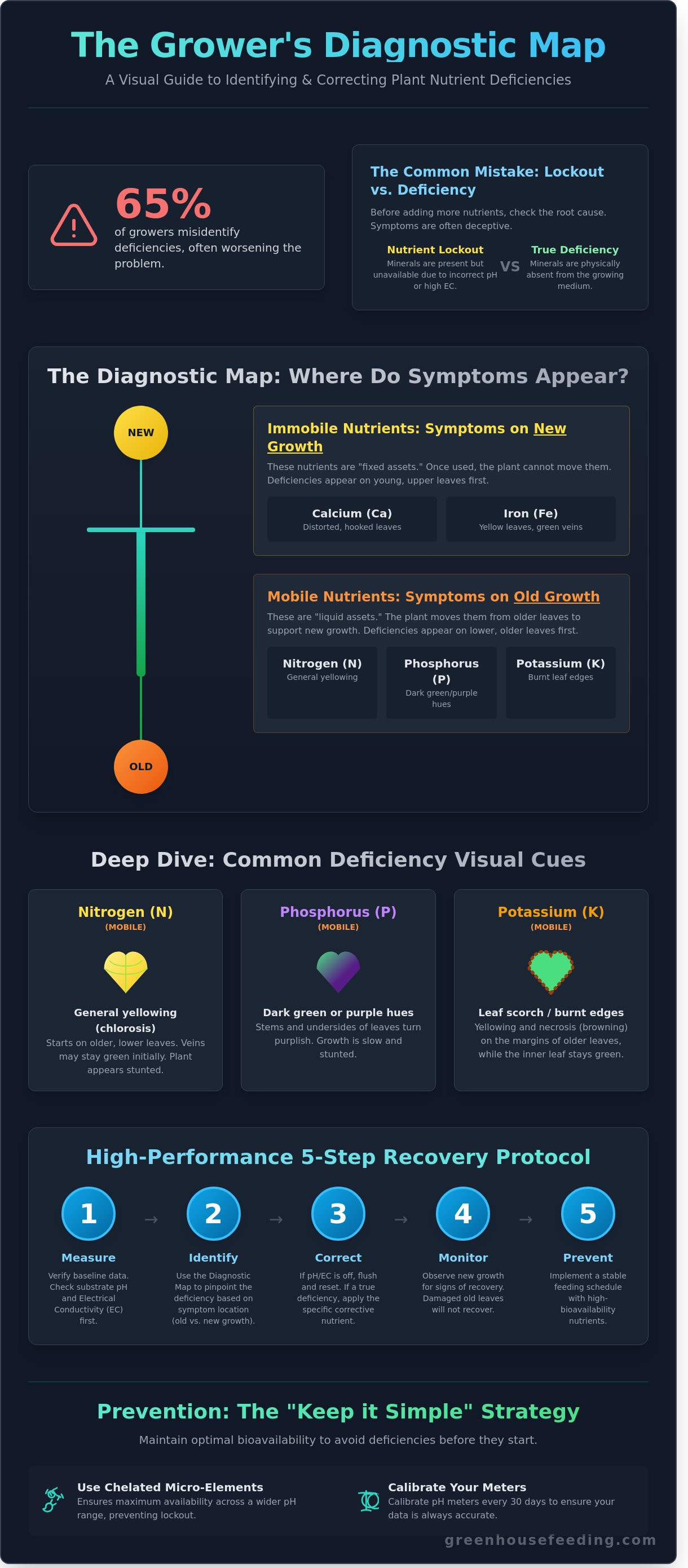
Precision in diagnosing plant nutrient deficiencies starts with a simple observation: where did the symptom first appear? Plants function as efficient biological transport systems. When a specific element is in short supply, the plant's internal chemistry dictates whether it can relocate existing reserves or if the new growth must suffer the deficit. Understanding this transport logic eliminates 90% of the guesswork for the grower.
Mobile nutrients are the plant's liquid assets. If the root zone lacks these elements, the plant scavenges them from older, lower leaves to sustain the terminal bud. Immobile nutrients are fixed assets. Once they're integrated into the cell walls or enzymes of older foliage, they cannot be redistributed. Consequently, a shortage of immobile elements manifests exclusively in the youngest growth at the top of the plant. This spatial distinction is your most reliable diagnostic tool.
Identifying Mobile Nutrient Deficiencies
- Nitrogen (N): Chlorosis begins at the plant's base. You'll see a general yellowing of the oldest leaves while the veins stay green initially. If left uncorrected, the entire leaf eventually withers and drops.
- Phosphorus (P): This often presents as abnormally dark green or even blue-green foliage. In roughly 85% of cases involving cold substrates below 15°C, you'll observe distinct purple hues on the stems and leaf undersides.
- Potassium (K): Look for "leaf scorch." The margins of older leaves turn brown and necrotic, appearing as if they've been burnt by a flame, while the inner leaf remains functional.
Identifying Immobile Nutrient Deficiencies
Calcium (Ca) is the most critical immobile element for structural integrity. A deficit leads to hooked, distorted new leaves and "rusty" necrotic spots. Maintaining a consistent supply of calmag for plants is the most effective way to prevent these structural failures. Iron (Fe) deficiency is equally distinct; it causes sharp interveinal chlorosis on new foliage where the leaf turns vivid yellow but the veins remain dark green. Trace elements like Boron and Zinc also target the terminal shoots, often causing "resetting" of the growth tip or twisted, brittle new stems.
Efficiency is the hallmark of a master grower. If your diagnostic map indicates a multi-element shortage, our specialized feeding lines provide a direct, uncomplicated path to recovery. We've optimized the mineral ratios so you can focus on the results rather than the chemistry. Don't let a simple mobile deficiency stall your entire production cycle.
Deep Dive: Common Mineral Deficiencies and Visual Cues
Precision feeding requires an acute eye for biological detail. When diagnosing plant nutrient deficiencies, you're looking at the plant's internal transport system in real-time. High-performance cultivation often hits bottlenecks with the "Big Six" elements. Magnesium (Mg) is perhaps the most critical secondary nutrient because it sits at the center of every chlorophyll molecule. If Mg levels drop below 50 ppm in your root zone, photosynthesis effectively halts. You'll see "tiger striping," where leaf veins stay green while the tissue between them yellows. This usually hits mid-level leaves first as the plant redirects mobile minerals to the top canopy to protect new growth.
Distinguishing between lack and excess is the first step toward a solution. Nutrient burn occurs when the total dissolved solids exceed the plant's osmotic threshold, often at an EC above 2.6. This manifests as scorched, curled leaf tips that look uniform across the plant. A deficiency, however, results in systemic discoloration or structural weakness within the leaf blade. Professional growers use a 10x loupe to inspect these visual cues before adjusting their feeding schedules. It's a matter of chemistry, not guesswork.
The Macro-Nutrient Crisis: N-P-K
Nitrogen (N) is the engine of the vegetative stage. A 15% drop in available N causes older leaves to turn a uniform pale yellow. This mobile element moves from bottom to top. Phosphorus (P) deficiency is a silent yield killer during the first 21 days of flowering. Look for dark, metallic green leaves or deep purple petioles. This indicates a failure in energy transfer, often leading to a 25% reduction in final harvest weight. Potassium (K) manages water pressure. If your plants wilt while the substrate is wet, K levels are likely insufficient. Potassium deficiency shows as "burnt" edges on older leaves, but unlike nutrient burn, the discoloration is irregular and accompanied by necrotic spotting.
Secondary and Micro-Element Gaps
Calcium and Magnesium work in a tight synergy. In reverse osmosis or soft water setups with less than 0.2 EC, these elements must be added together to avoid localized necrosis. Sulfur deficiency is tricky. It mimics Nitrogen yellowing but appears on the newest growth first. Because Sulfur is immobile, the plant can't scavenge it from older tissue. Diagnosing plant nutrient deficiencies also involves watching for micro-element toxicities. Excess Manganese or Boron can cause spots that look exactly like a lack of Calcium. Always maintain a pH range of 5.5 to 6.5 to keep these minerals bio-available. Simple, consistent monitoring prevents these gaps from becoming crop-ending crises.
The 5-Step Recovery Protocol: Restoring Plant Health
Diagnosing plant nutrient deficiencies is only the first half of the battle. Once you've identified the issue, you must act with precision to reverse the damage. Follow this 5-step protocol to stabilize your medium and restore biological function. It's a systematic approach designed to eliminate guesswork.
- Step 1: Flush the medium. Use water adjusted to a pH of 5.8 to 6.2. This resets the electrical conductivity (EC) and clears the root zone of antagonistic mineral accumulations that block uptake.
- Step 2: Measure the runoff. Use a calibrated EC meter to test the first 20% of the drainage. If the runoff EC is 0.5 points higher than the input, salt buildup was the primary cause of your nutrient lockout.
- Step 3: Apply a foliar feed. Provide immediate nutrition directly to the leaves. This bypasses the compromised root system while the medium dries to an optimal moisture level.
- Step 4: Reintroduce nutrients. Use a balanced, chelated mineral solution. Start at 50% of the recommended dose to avoid osmotic shock to the recovering root hairs.
- Step 5: Monitor new growth. Watch the apical meristem for 48 to 72 hours. Remember that necrotic tissue on old, damaged leaves will not turn green again; success is measured by the health of emerging foliage.
The Role of Foliar Feeding in Emergency Recovery
Foliar application is the fastest way to deliver high bio-availability when roots are struggling. Stomata absorb nutrients within 30 to 60 minutes, which is critical for survival. While diagnosing plant nutrient deficiencies helps you identify the "what," foliar feeding addresses the "now." This method is particularly effective for Magnesium (Mg) and Iron (Fe) shortages. Spray during the first hour of light or just after the lights turn off to prevent leaf scorch. Keep the solution at a low concentration, usually 1.0 to 1.2 EC, and use a wetting agent to reduce surface tension for uniform coverage.
Adjusting Your Feeding Schedule
Precision is the core of successful cultivation. After the 72-hour recovery window, transition from the corrective half-strength dose back to a full maintenance schedule. Use a digital EC meter daily to ensure your medium stays within the 1.4 to 2.2 range. Record these values in a dedicated logbook. Data from the last 24 months shows that most deficiencies are seasonal. These are often linked to temperature fluctuations that affect transpiration rates rather than a lack of minerals. At Green House Feeding, we believe in a "Keep it Simple" philosophy; focus on the fundamental chemistry and the results will follow.
Maintain peak performance and prevent future lockouts with our specialized mineral-organic feeding solutions.
Preventing Deficiencies: The "Keep it Simple" Strategy
Success in the grow room starts with a proactive mindset. While diagnosing plant nutrient deficiencies is a vital skill for any grower, the most efficient operations focus on prevention. A balanced "all-in-one" powder formula eliminates the complexity that leads to human error. By providing every essential element in a single application, you remove the risk of measuring mistakes often found in multi-bottle liquid systems. This streamlined approach ensures consistency across every feeding cycle and keeps the root zone stable.
Bio-availability is the cornerstone of deficiency prevention. Our formulas utilize chelated micro-elements to ensure minerals remain accessible to the plant across a wider pH range. This chemical stability means your crop can still access iron, zinc, and manganese even if your reservoir pH drifts slightly between 5.8 and 6.2. Integrating organic plant nutrients further strengthens this system. These organic inputs build a natural mineral buffer in the substrate, acting as a safety net against sudden nutritional gaps that occur in purely synthetic setups.
Precision Mineral Feeding with Powder Formulas
Mineral powders like Powder Feeding Grow and Hybrids offer superior stability and 100% solubility. Unlike liquid concentrates that can salt out or degrade over time, these high-purity salts remain potent for years. We categorize our feeding programs by the plant life cycle. Using Short Flowering or Long Flowering formulas prevents stage-specific deficiencies by matching the specific NPK requirements of different genetic varieties. Don't overcomplicate the dosage. With high-purity salts, less is more. Stick to a range of 0.5g to 1.5g per liter to maintain optimal EC levels without risking toxicity.
Building Long-Term Plant Immunity
A healthy root zone is the best defense against nutrient lockout. Using Bio Enhancer introduces beneficial microbes and humic acids that make minerals more bio-available to the plant. This biological activity improves nutrient uptake efficiency by up to 25% compared to sterile environments. Environmental consistency is equally important. Maintain your water temperature between 18°C and 22°C to ensure maximum oxygenation. Cold water slows metabolic processes, while warm water lacks the oxygen required for nutrient transport. Effective diagnosing plant nutrient deficiencies ultimately reveals that most issues stem from root health, not just a lack of minerals. Focus on the foundation, and the plant will take care of the rest.
Master Your Garden’s Nutritional Balance
Successful cultivation relies on precise observation and rapid response. You've learned to distinguish between mobile and immobile elements by identifying where symptoms first appear on the foliage. By following the 5-step recovery protocol, you can reverse physiological stress before it impacts your final harvest weight. Mastering the art of diagnosing plant nutrient deficiencies ensures your garden remains productive throughout the entire life cycle.
Green House Feeding eliminates the guesswork with formulas developed through 20 years of technical research. Our award-winning nutrient line is currently utilized by professional cultivators in over 100 countries to maintain peak crop health. We use chelated micro-elements to ensure maximum bio-availability, even when water quality varies. You don't need a complex shelf of additives to achieve elite results. Adopting a simplified feeding schedule allows you to focus on the plants rather than the chemistry. Explore our specialized Powder Feeding line for precision plant nutrition and give your crop the scientific advantage it deserves. Your path to a perfect harvest starts with professional-grade simplicity.
Frequently Asked Questions
What is the most common nutrient deficiency in plants?
Nitrogen is the most common nutrient deficiency found in horticultural crops. It's a mobile element that plants require in large quantities, often making up 1.5% to 5% of their total dry matter. Because it moves easily within the plant, you'll see symptoms on older, lower leaves first. Maintaining a consistent feeding schedule prevents the depletion of this essential building block for chlorophyll and amino acids.
Can a plant recover from a severe nutrient deficiency?
Plants can recover from severe deficiencies, but the physiological stress often reduces final yields by 15% to 25%. While new growth will emerge healthy after you correct the mineral balance, existing damage like necrosis won't reverse. Success depends on how quickly you act. Use highly soluble, mineral-organic nutrients to ensure immediate bio-availability and minimize the recovery window for the plant's metabolic processes.
Why are my leaves turning yellow if I am using high-quality fertilizer?
Yellow leaves often indicate nutrient lockout caused by incorrect pH levels rather than a lack of fertilizer. Even the highest quality nutrients won't work if the substrate pH deviates from the 5.5 to 6.5 range required for mineral solubility. When the root zone becomes too acidic or alkaline, specific elements like Iron or Manganese become chemically unavailable. Always calibrate your pH meters weekly to ensure accuracy.
How do I tell the difference between overwatering and Nitrogen deficiency?
Nitrogen deficiency starts with uniform yellowing of the oldest leaves, while overwatering causes a general drooping followed by yellowing across the entire plant. When diagnosing plant nutrient deficiencies, look at the leaf texture. Nitrogen-deficient leaves remain firm until they wither; overwatered leaves feel soft and heavy. Check your substrate moisture levels; roots need 20% oxygen to facilitate nutrient uptake effectively.
What is interveinal chlorosis and what causes it?
Interveinal chlorosis is a condition where the leaf tissue turns yellow while the veins remain green. This symptom typically signals a Magnesium or Iron deficiency. Magnesium is the central atom in the chlorophyll molecule, representing about 6% of the total chlorophyll. If your feeding solution lacks chelated micro-elements, the plant can't maintain the 0.2% magnesium concentration needed for efficient photosynthesis and energy transport.
Does pH affect how my plant absorbs nutrients?
pH is the primary factor governing the solubility and bio-availability of all essential minerals. For example, Phosphorus availability can drop by 50% if the pH rises above 7.5. We design our products to be stable, but you must maintain the root zone within specific parameters to prevent chemical precipitation. Diagnosing plant nutrient deficiencies often starts with a simple pH test of the runoff water to ensure the environment is optimal.
Should I cut off leaves that have been damaged by a deficiency?
You should only remove leaves if they've suffered more than 50% necrosis or are attracting pathogens. Damaged leaves still contain mobile nutrients that the plant can translocate to new growth during a crisis. If you prune too aggressively, you remove the plant's natural nutrient reserves and reduce its photosynthetic capacity. Wait until the leaf is entirely brown and brittle before detaching it from the stem.
How fast do plants respond to a corrective feeding?
Plants typically show visual signs of recovery within 3 to 7 days after a corrective feeding. While the internal chemical balance begins to shift within 48 hours, the development of healthy new growth takes longer. Use highly soluble mineral-organic powders to ensure the fastest possible uptake. If you don't see a change in the color of new shoots after one week, re-evaluate your root zone temperature and pH settings.
FAQ
pH Lockout: The Great Mimicker
Understanding soil pH is the master key to mineral availability. When the pH deviates from the optimal range, specific elements become chemically locked. For example, Iron becomes largely unavailable when pH levels rise above 7.0, while Phosphorus availability drops significantly below 5.5. To ensure your diagnostic data is accurate, calibrate your pH meters every 30 days using professional 4.0 and 7.0 buffer solutions.
Environmental Stressors vs. Nutritional Gaps
Environmental conditions often produce symptoms that mimic nutritional issues. Heat stress, typically occurring above 30°C, causes leaf margins to curl and brown, resembling Potassium burn. Similarly, overwatering restricts oxygen in the root zone, leading to a general yellowing that looks like Nitrogen deficiency. Monitor your Vapor Pressure Deficit (VPD) closely. A VPD outside the 0.8 to 1.2 kPa range disrupts the transpiration stream, preventing nutrient transport regardless of your feeding schedule. Precision in diagnosing plant nutrient deficiencies starts with a simple observation: where did the symptom first appear? Plants function as efficient biological transport systems. When a specific element is in short supply, the plant's internal chemistry dictates whether it can relocate existing reserves or if the new growth must suffer the deficit. Understanding this transport logic eliminates 90% of the guesswork for the grower. Mobile nutrients are the plant's liquid assets. If the root zone lacks these elements, the plant scavenges them from older, lower leaves to sustain the terminal bud. Immobile nutrients are fixed assets. Once they're integrated into the cell walls or enzymes of older foliage, they cannot be redistributed. Consequently, a shortage of immobile elements manifests exclusively in the youngest growth at the top of the plant. This spatial distinction is your most reliable diagnostic tool.
Identifying Mobile Nutrient Deficiencies
Nitrogen (N): Chlorosis begins at the plant's base. You'll see a general yellowing of the oldest leaves while the veins stay green initially. If left uncorrected, the entire leaf eventually withers and drops.
Phosphorus (P): This often presents as abnormally dark green or even blue-green foliage. In roughly 85% of cases involving cold substrates below 15°C, you'll observe distinct purple hues on the stems and leaf undersides.
Potassium (K): Look for "leaf scorch." The margins of older leaves turn brown and necrotic, appearing as if they've been burnt by a flame, while the inner leaf remains functional.
Identifying Immobile Nutrient Deficiencies
Calcium (Ca) is the most critical immobile element for structural integrity. A deficit leads to hooked, distorted new leaves and "rusty" necrotic spots. Maintaining a consistent supply of calmag for plants is the most effective way to prevent these structural failures. Iron (Fe) deficiency is equally distinct; it causes sharp interveinal chlorosis on new foliage where the leaf turns vivid yellow but the veins remain dark green. Trace elements like Boron and Zinc also target the terminal shoots, often causing "resetting" of the growth tip or twisted, brittle new stems. Efficiency is the hallmark of a master grower. If your diagnostic map indicates a multi-element shortage, our specialized feeding lines provide a direct, uncomplicated path to recovery. We've optimized the mineral ratios so you can focus on the results rather than the chemistry. Don't let a simple mobile deficiency stall your entire production cycle. Precision feeding requires an acute eye for biological detail. When diagnosing plant nutrient deficiencies, you're looking at the plant's internal transport system in real-time. High-performance cultivation often hits bottlenecks with the "Big Six" elements. Magnesium (Mg) is perhaps the most critical secondary nutrient because it sits at the center of every chlorophyll molecule. If Mg levels drop below 50 ppm in your root zone, photosynthesis effectively halts. You'll see "tiger striping," where leaf veins stay green while the tissue between them yellows. This usually hits mid-level leaves first as the plant redirects mobile minerals to the top canopy to protect new growth. Distinguishing between lack and excess is the first step toward a solution. Nutrient burn occurs when the total dissolved solids exceed the plant's osmotic threshold, often at an EC above 2.6. This manifests as scorched, curled leaf tips that look uniform across the plant. A deficiency, however, results in systemic discoloration or structural weakness within the leaf blade. Professional growers use a 10x loupe to inspect these visual cues before adjusting their feeding schedules. It's a matter of chemistry, not guesswork.
The Macro-Nutrient Crisis: N-P-K
Nitrogen (N) is the engine of the vegetative stage. A 15% drop in available N causes older leaves to turn a uniform pale yellow. This mobile element moves from bottom to top. Phosphorus (P) deficiency is a silent yield killer during the first 21 days of flowering. Look for dark, metallic green leaves or deep purple petioles. This indicates a failure in energy transfer, often leading to a 25% reduction in final harvest weight. Potassium (K) manages water pressure. If your plants wilt while the substrate is wet, K levels are likely insufficient. Potassium deficiency shows as "burnt" edges on older leaves, but unlike nutrient burn, the discoloration is irregular and accompanied by necrotic spotting.
Secondary and Micro-Element Gaps
Calcium and Magnesium work in a tight synergy. In reverse osmosis or soft water setups with less than 0.2 EC, these elements must be added together to avoid localized necrosis. Sulfur deficiency is tricky. It mimics Nitrogen yellowing but appears on the newest growth first. Because Sulfur is immobile, the plant can't scavenge it from older tissue. Diagnosing plant nutrient deficiencies also involves watching for micro-element toxicities. Excess Manganese or Boron can cause spots that look exactly like a lack of Calcium. Always maintain a pH range of 5.5 to 6.5 to keep these minerals bio-available. Simple, consistent monitoring prevents these gaps from becoming crop-ending crises. Diagnosing plant nutrient deficiencies is only the first half of the battle. Once you've identified the issue, you must act with precision to reverse the damage. Follow this 5-step protocol to stabilize your medium and restore biological function. It's a systematic approach designed to eliminate guesswork.
The Role of Foliar Feeding in Emergency Recovery
Foliar application is the fastest way to deliver high bio-availability when roots are struggling. Stomata absorb nutrients within 30 to 60 minutes, which is critical for survival. While diagnosing plant nutrient deficiencies helps you identify the "what," foliar feeding addresses the "now." This method is particularly effective for Magnesium (Mg) and Iron (Fe) shortages. Spray during the first hour of light or just after the lights turn off to prevent leaf scorch. Keep the solution at a low concentration, usually 1.0 to 1.2 EC, and use a wetting agent to reduce surface tension for uniform coverage.
Adjusting Your Feeding Schedule
Precision is the core of successful cultivation. After the 72-hour recovery window, transition from the corrective half-strength dose back to a full maintenance schedule. Use a digital EC meter daily to ensure your medium stays within the 1.4 to 2.2 range. Record these values in a dedicated logbook. Data from the last 24 months shows that most deficiencies are seasonal. These are often linked to temperature fluctuations that affect transpiration rates rather than a lack of minerals. At Green House Feeding, we believe in a "Keep it Simple" philosophy; focus on the fundamental chemistry and the results will follow. Maintain peak performance and prevent future lockouts with our specialized mineral-organic feeding solutions. Success in the grow room starts with a proactive mindset. While diagnosing plant nutrient deficiencies is a vital skill for any grower, the most efficient operations focus on prevention. A balanced "all-in-one" powder formula eliminates the complexity that leads to human error. By providing every essential element in a single application, you remove the risk of measuring mistakes often found in multi-bottle liquid systems. This streamlined approach ensures consistency across every feeding cycle and keeps the root zone stable. Bio-availability is the cornerstone of deficiency prevention. Our formulas utilize chelated micro-elements to ensure minerals remain accessible to the plant across a wider pH range. This chemical stability means your crop can still access iron, zinc, and manganese even if your reservoir pH drifts slightly between 5.8 and 6.2. Integrating organic plant nutrients further strengthens this system. These organic inputs build a natural mineral buffer in the substrate, acting as a safety net against sudden nutritional gaps that occur in purely synthetic setups.
Precision Mineral Feeding with Powder Formulas
Mineral powders like Powder Feeding Grow and Hybrids offer superior stability and 100% solubility. Unlike liquid concentrates that can salt out or degrade over time, these high-purity salts remain potent for years. We categorize our feeding programs by the plant life cycle. Using Short Flowering or Long Flowering formulas prevents stage-specific deficiencies by matching the specific NPK requirements of different genetic varieties. Don't overcomplicate the dosage. With high-purity salts, less is more. Stick to a range of 0.5g to 1.5g per liter to maintain optimal EC levels without risking toxicity.
Building Long-Term Plant Immunity
A healthy root zone is the best defense against nutrient lockout. Using Bio Enhancer introduces beneficial microbes and humic acids that make minerals more bio-available to the plant. This biological activity improves nutrient uptake efficiency by up to 25% compared to sterile environments. Environmental consistency is equally important. Maintain your water temperature between 18°C and 22°C to ensure maximum oxygenation. Cold water slows metabolic processes, while warm water lacks the oxygen required for nutrient transport. Effective diagnosing plant nutrient deficiencies ultimately reveals that most issues stem from root health, not just a lack of minerals. Focus on the foundation, and the plant will take care of the rest. Successful cultivation relies on precise observation and rapid response. You've learned to distinguish between mobile and immobile elements by identifying where symptoms first appear on the foliage. By following the 5-step recovery protocol, you can reverse physiological stress before it impacts your final harvest weight. Mastering the art of diagnosing plant nutrient deficiencies ensures your garden remains productive throughout the entire life cycle. Green House Feeding eliminates the guesswork with formulas developed through 20 years of technical research. Our award-winning nutrient line is currently utilized by professional cultivators in over 100 countries to maintain peak crop health. We use chelated micro-elements to ensure maximum bio-availability, even when water quality varies. You don't need a complex shelf of additives to achieve elite results. Adopting a simplified feeding schedule allows you to focus on the plants rather than the chemistry. Explore our specialized Powder Feeding line for precision plant nutrition and give your crop the scientific advantage it deserves. Your path to a perfect harvest starts with professional-grade simplicity.
What is the most common nutrient deficiency in plants?
Nitrogen is the most common nutrient deficiency found in horticultural crops. It's a mobile element that plants require in large quantities, often making up 1.5% to 5% of their total dry matter. Because it moves easily within the plant, you'll see symptoms on older, lower leaves first. Maintaining a consistent feeding schedule prevents the depletion of this essential building block for chlorophyll and amino acids.
Can a plant recover from a severe nutrient deficiency?
Plants can recover from severe deficiencies, but the physiological stress often reduces final yields by 15% to 25%. While new growth will emerge healthy after you correct the mineral balance, existing damage like necrosis won't reverse. Success depends on how quickly you act. Use highly soluble, mineral-organic nutrients to ensure immediate bio-availability and minimize the recovery window for the plant's metabolic processes.
Why are my leaves turning yellow if I am using high-quality fertilizer?
Yellow leaves often indicate nutrient lockout caused by incorrect pH levels rather than a lack of fertilizer. Even the highest quality nutrients won't work if the substrate pH deviates from the 5.5 to 6.5 range required for mineral solubility. When the root zone becomes too acidic or alkaline, specific elements like Iron or Manganese become chemically unavailable. Always calibrate your pH meters weekly to ensure accuracy.
How do I tell the difference between overwatering and Nitrogen deficiency?
Nitrogen deficiency starts with uniform yellowing of the oldest leaves, while overwatering causes a general drooping followed by yellowing across the entire plant. When diagnosing plant nutrient deficiencies, look at the leaf texture. Nitrogen-deficient leaves remain firm until they wither; overwatered leaves feel soft and heavy. Check your substrate moisture levels; roots need 20% oxygen to facilitate nutrient uptake effectively.
What is interveinal chlorosis and what causes it?
Interveinal chlorosis is a condition where the leaf tissue turns yellow while the veins remain green. This symptom typically signals a Magnesium or Iron deficiency. Magnesium is the central atom in the chlorophyll molecule, representing about 6% of the total chlorophyll. If your feeding solution lacks chelated micro-elements, the plant can't maintain the 0.2% magnesium concentration needed for efficient photosynthesis and energy transport.
Does pH affect how my plant absorbs nutrients?
pH is the primary factor governing the solubility and bio-availability of all essential minerals. For example, Phosphorus availability can drop by 50% if the pH rises above 7.5. We design our products to be stable, but you must maintain the root zone within specific parameters to prevent chemical precipitation. Diagnosing plant nutrient deficiencies often starts with a simple pH test of the runoff water to ensure the environment is optimal.
Should I cut off leaves that have been damaged by a deficiency?
You should only remove leaves if they've suffered more than 50% necrosis or are attracting pathogens. Damaged leaves still contain mobile nutrients that the plant can translocate to new growth during a crisis. If you prune too aggressively, you remove the plant's natural nutrient reserves and reduce its photosynthetic capacity. Wait until the leaf is entirely brown and brittle before detaching it from the stem.
How fast do plants respond to a corrective feeding?
Plants typically show visual signs of recovery within 3 to 7 days after a corrective feeding. While the internal chemical balance begins to shift within 48 hours, the development of healthy new growth takes longer. Use highly soluble mineral-organic powders to ensure the fastest possible uptake. If you don't see a change in the color of new shoots after one week, re-evaluate your root zone temperature and pH settings.
Leave a comment
Log in to post comments