

 Español
Over 70% of cultivation failures stem from a fundamental misunderstanding of substrate moisture levels. Most growers...
Search in blog
Blog categories
Latest posts
How Much Water Do Plants Need? The Expert Guide to Precision Irrigation
Read more
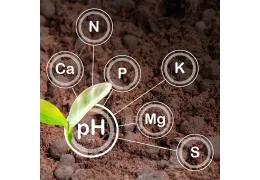
What is PPM? A Precision Guide to Nutrient Concentration for Growers
Read more
What if the line between a thriving crop and a burnt-out failure was a single, measurable number? You've followed the...
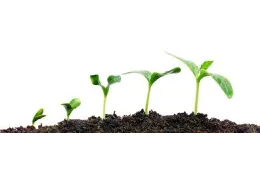
What Does a Plant Need to Survive and Grow? The 5 Pillars of Cultivation
Read more
Your plants don't need a complex cocktail of additives to thrive. In fact, over 60% of common cultivation issues like...
Fertilizer for Cannabis Plants: The Expert Guide to Optimal Feeding
Read more
Complex, multi-bottle nutrient lines are the single biggest point of failure for professional and hobbyist growers...
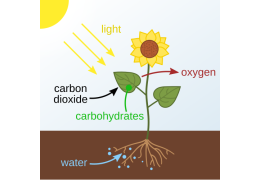
What Is Photosynthesis? And why is the most important thing on earth?
Read more
What Is Photosynthesis? And why is the most important thing on earth?
Popular posts
Fertilizer for Cannabis Plants: The Expert Guide to Optimal Feeding
Complex, multi-bottle nutrient lines are the single biggest point of failure for professional and hobbyist growers...
Read more
What is PPM? A Precision Guide to Nutrient Concentration for Growers
What if the line between a thriving crop and a burnt-out failure was a single, measurable number? You've followed the...
Read more
Featured posts
What Is Photosynthesis? And why is the most important thing on earth?
What Is Photosynthesis? And why is the most important thing on earth?
Read more
Irrigation method with lightmix (peat based substrate) + GHF Bioline (peat based substrate)
How to optimize your irrigation when using peat based substrate and organic dry amendment like our Bioline ?
Read more
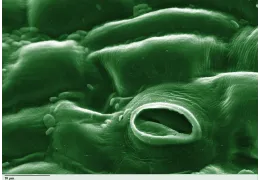
What is VPD ?
VPD controls how much water the plant loses, which controls cooling, nutrient uptake, stomatal behaviour, and...
Read more
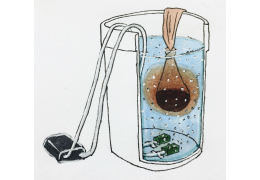
Extra mineral aerated compost tea
Extra mineral aerated compost tea (calcium and trace element)
Read more
Indoor grow lights
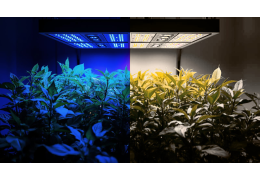
For many years, High-Pressure Sodium (HPS) lamps were the dominant lighting system used for indoor plant cultivation, as they provided reliable light intensity and were considered the industry standard. However, over the past decade, Light Emitting Diode (LED) technology has progressively taken their place in indoor growing environments. While HPS systems are still widely used today and continue to offer certain advantages—such as strong light penetration and proven performance—modern LED systems bring a range of significant benefits that are reshaping the industry.
New generations of LED lighting are far more energy-efficient, produce less heat, and offer greater control over light spectrum, allowing growers to better tailor conditions to each stage of plant growth. These advantages translate directly into lower electricity consumption, reduced cooling requirements, and overall operational savings. Since energy costs represent a major portion of total production expenses in indoor farming, the improved efficiency of LED technology has become a key factor driving its rapid adoption over traditional HPS systems.
Pro/cons HPS/LED
HPS LED
|
High intensity
Cheaper at purchase
More heat (advantage in cold climate) but can be detrimental to quality
Orange light not good for plant inspection
Shorter lifespan but lower cost for replacement
More far red and more photosynthetic efficient but more stretch ….
Need more height, that reduce the effectiveness of the light intensity
lower yield per watt compared to LED, but still good if well managed.
|
More energy efficient
More expensive at purchase but cheaper on the long run
Less heat, better climate management
White light better visual effect
Longer lifespan
Full spectrum with more blue (less stretch)
Less height between top canopy and light
Better yield for power consumed |
In our production room or in our R&D department, we tested a lot of different brands of HPS and LED: Gavita, DLI, Fluence, Kroptek, Vipar spectra, Sanlight, Dimlux, Florastar and other distributors LED's.
They all performed well and if you check those brands, you will find what you need for your indoor room.
Posted in:
Grow light
Leave a comment
Log in to post comments