

 Español
Over 70% of cultivation failures stem from a fundamental misunderstanding of substrate moisture levels. Most growers...
Search in blog
Blog categories
Latest posts
How Much Water Do Plants Need? The Expert Guide to Precision Irrigation
Read more
What is PPM? A Precision Guide to Nutrient Concentration for Growers
Read more
What if the line between a thriving crop and a burnt-out failure was a single, measurable number? You've followed the...
What Does a Plant Need to Survive and Grow? The 5 Pillars of Cultivation
Read more
Your plants don't need a complex cocktail of additives to thrive. In fact, over 60% of common cultivation issues like...
Fertilizer for Cannabis Plants: The Expert Guide to Optimal Feeding
Read more
Complex, multi-bottle nutrient lines are the single biggest point of failure for professional and hobbyist growers...
What Is Photosynthesis? And why is the most important thing on earth?
Read more
What Is Photosynthesis? And why is the most important thing on earth?
Popular posts

Fertilizer for Cannabis Plants: The Expert Guide to Optimal Feeding
Complex, multi-bottle nutrient lines are the single biggest point of failure for professional and hobbyist growers...
Read more
What is PPM? A Precision Guide to Nutrient Concentration for Growers
What if the line between a thriving crop and a burnt-out failure was a single, measurable number? You've followed the...
Read more
What Does a Plant Need to Survive and Grow? The 5 Pillars of Cultivation
Your plants don't need a complex cocktail of additives to thrive. In fact, over 60% of common cultivation issues like...
Read more
Featured posts
What Is Photosynthesis? And why is the most important thing on earth?
What Is Photosynthesis? And why is the most important thing on earth?
Read more
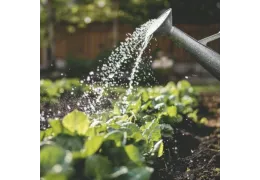
Irrigation method with lightmix (peat based substrate) + GHF Bioline (peat based substrate)
How to optimize your irrigation when using peat based substrate and organic dry amendment like our Bioline ?
Read more
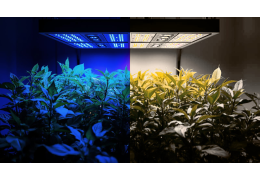
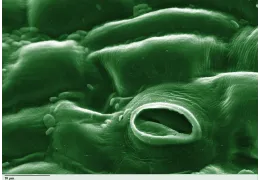
What is VPD ?
VPD controls how much water the plant loses, which controls cooling, nutrient uptake, stomatal behaviour, and...
Read more
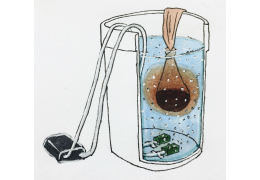
Extra mineral aerated compost tea
Extra mineral aerated compost tea (calcium and trace element)
Read more
What is PPM? A Precision Guide to Nutrient Concentration for Growers
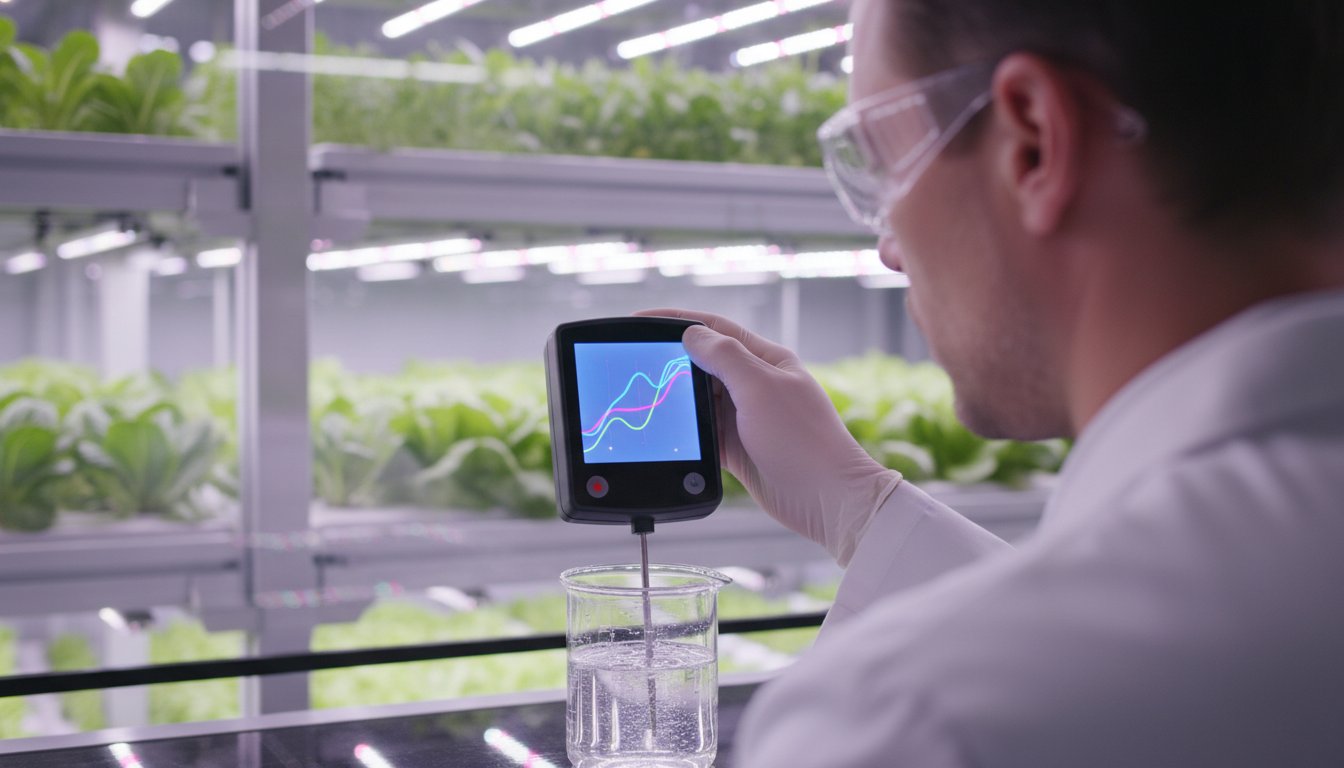
What if the line between a thriving crop and a burnt-out failure was a single, measurable number?
You've followed the feeding schedules and invested in quality genetics. Yet, inconsistent growth, yellowing leaves, and the constant threat of nutrient burn can sabotage a harvest. The confusion over different meter readings and the fear of miscalculation is a real challenge for even experienced growers, turning precise feeding into a frustrating guessing game.
This guide provides the solution. We will deliver a complete, pragmatic answer to the question, what is ppm, and give you total control over your plant's nutrition. You'll master the science of Parts Per Million to deliver the exact mineral concentration your plants need for optimal growth, from seedling to harvest, without the risk of deficiency or toxicity. We'll show you how to use your meter correctly, interpret readings, and build a feeding strategy that guarantees healthy, vibrant plants and maximum yield. It's time to stop guessing and start measuring.
Key Takeaways
- Understand what is ppm and how it represents the total mineral concentration in your nutrient solution, which is the first step to preventing costly feeding errors.
- Discover why your TDS meter might be giving you inaccurate readings and learn to master the industry-standard 500 and 700 conversion scales.
- Learn the science behind osmotic pressure and how incorrect PPM levels can dehydrate your plants, even when they are fully watered.
- Implement a precise measurement routine for your reservoir, or simplify the entire process with highly soluble mineral feedings for immediate, accurate results.
Table of Contents
- What is PPM? Understanding Parts Per Million in Plant Nutrition
- The PPM Scale Dilemma: 500 vs. 700 Scales Explained
- How PPM Levels Affect Plant Health and Nutrient Uptake
- Measuring and Adjusting PPM in Your Reservoir
- Simplifying Your Feed: The GHF Approach to Mineral Concentration
What is PPM? Understanding Parts Per Million in Plant Nutrition
Precision in horticulture isn't optional. It is the foundation of maximum yield and optimal plant health. The first metric every serious grower must master is PPM.
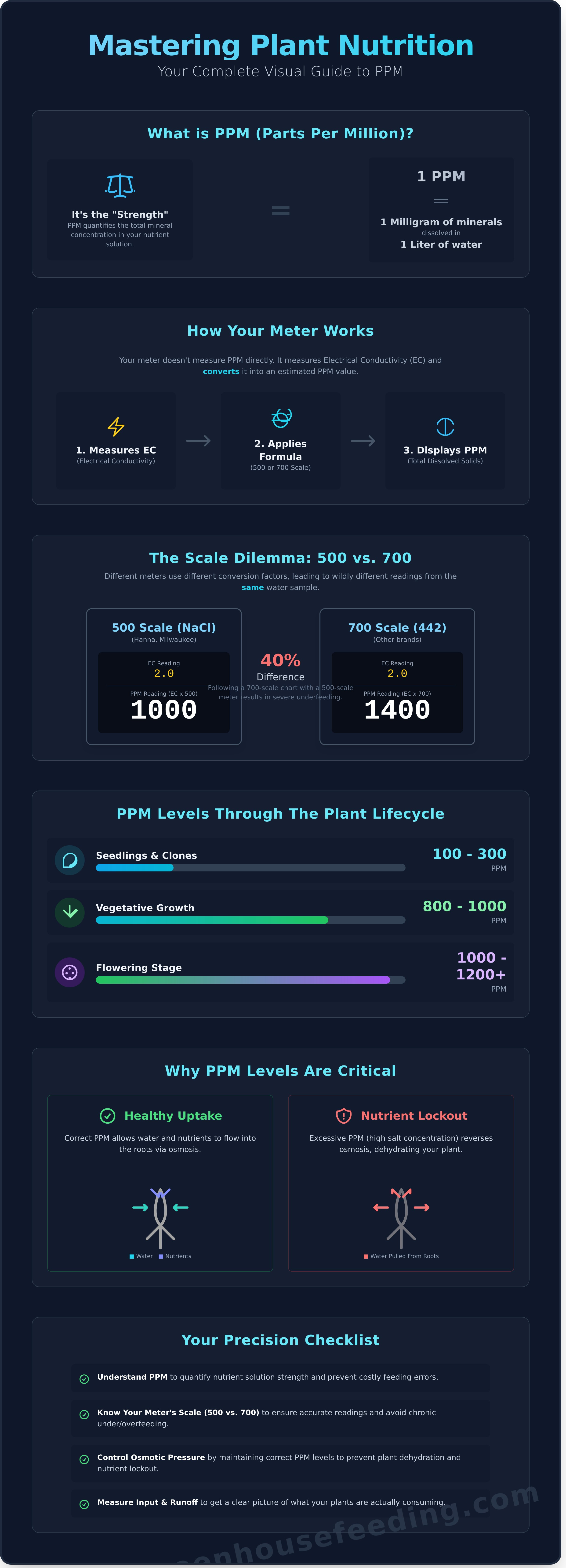
PPM stands for Parts Per Million. It's a unit of measurement used to describe a very low concentration of a substance within a solution. In hydroponics and soil cultivation, PPM quantifies the concentration of total dissolved mineral salts in your water. Think of it as the "strength" of your nutrient solution. For example, 1 PPM is equivalent to 1 milligram of soluble minerals dissolved in 1 liter of water (1 mg/L). This gives you a precise, actionable number for your plant feeding schedule.
So, what is ppm in practical terms? It’s your primary tool for data-driven feeding. Instead of guessing your nutrient strength, you measure it. This concept is part of a wider scientific measurement system known as Parts-per notation, which provides a universal standard for expressing dilute concentrations. By understanding and controlling PPM, you move from being a gardener to a cultivator, ensuring your plants get exactly what they need, when they need it. This removes ambiguity and replaces it with data.
PPM vs. TDS: What Is the Difference?
The terms TDS and PPM are often used interchangeably, but they represent different concepts. TDS stands for Total Dissolved Solids, which is the actual substance being measured-all the mobile charged ions, including minerals and salts, in your water. PPM is simply the unit used to express the TDS measurement. Your TDS meter works by measuring Electrical Conductivity (EC) and then converting that reading into a PPM value. TDS is the what; PPM is the how much.
Why Precision Feeding Requires PPM Monitoring
A plant’s nutritional needs are not static. They change dramatically throughout its life cycle. Monitoring PPM allows you to tailor your feeding strategy with surgical precision. For example:
- Seedlings & Clones: Thrive in a low-PPM environment, typically 100-300 PPM.
- Vegetative Growth: Require a higher concentration, often between 800-1000 PPM.
- Flowering Stage: Demand the highest levels, sometimes reaching 1000-1200+ PPM.
Feeding without measuring PPM is like driving blind. You cannot see the invisible buildup of mineral salts in your growing medium. Over time, this accumulation leads to toxicity. By measuring the PPM of both your input solution and your runoff, you gain a clear picture of what your plants are consuming and what is being left behind.
Monitoring PPM is the most effective strategy for preventing nutrient lockout, a condition where plants cannot absorb available minerals due to excessive salt concentration in the root zone.
Ultimately, managing PPM is about eliminating guesswork. It provides the data needed for consistent, repeatable results. This control is the core of an efficient and successful cultivation strategy. It's how you keep your feeding simple and effective.
The PPM Scale Dilemma: 500 vs. 700 Scales Explained
Precision in plant nutrition is not optional. Yet, many growers unknowingly introduce massive errors into their feeding regimen. The problem lies with your Total Dissolved Solids (TDS) meter and an industry-wide lack of standardization.
Here is the critical fact: TDS meters do not measure Parts Per Million directly. They measure Electrical Conductivity (EC), which is the solution's ability to conduct an electrical current. The meter then uses a built-in mathematical formula to convert that EC reading into a PPM estimate. To truly understand what is ppm in this context, you must see it as a converted value, not a direct measurement. The core principle behind Understanding Parts Per Million (PPM) is measuring dissolved solids, but how your meter calculates this value is not universal.
This is where the problem begins. Different manufacturers use different conversion factors. An EC reading of 2.0 could display as 1000 PPM on one meter and 1400 PPM on another. This isn't a faulty meter; it's a different scale. Following a feeding chart based on the 700 scale with a meter using the 500 scale will result in consistently underfeeding your plants by 40%. This discrepancy can lead to chronic deficiencies and reduced yields.
Understanding the 500 (NaCl) Scale
The 500 scale, also known as the NaCl scale, is common among manufacturers like Hanna and Milwaukee. It uses a conversion factor of 0.5. This means it equates the conductivity of your nutrient solution to that of a sodium chloride solution. For many US-based hydroponic growers, this has become the de facto standard for comparing readings and following nutrient schedules. It's simple and widely adopted.
Understanding the 700 (442) Scale
The 700 scale, often called the 442 scale, is used by brands like BlueLab and Truncheon. It uses a conversion factor of 0.7. This scale is based on a solution containing 40% sodium sulfate, 40% sodium bicarbonate, and 20% sodium chloride. Proponents argue this "442" mixture more accurately mimics the ionic profile of typical mineral-organic nutrient solutions, providing a more relevant PPM estimate for horticultural use.
So, which scale is correct? Neither. The only truly universal measurement is EC. It is a direct, unambiguous reading of conductivity. Precision is non-negotiable for optimal results. It's why our simple feeding schedules provide targets in EC (mS/cm), removing any conversion errors from your process.
To avoid feeding errors, you must know which scale your meter uses. Here’s how to check:
- Read the Manual: The product manual is the most reliable source. It will specify the conversion factor (e.g., 0.5 or 0.7) or the scale name (NaCl or 442).
- Check the Product: Some meters have the scale printed directly on the device or its packaging.
- Use a Calibration Standard: Test your meter in a known PPM calibration solution. If you use a 1000 PPM 500-scale solution and your meter reads 1000, it uses the 500 scale. If it reads approximately 1400, it uses the 700 scale.
Knowing your meter's scale is the first step toward accurate feeding. The best practice is to measure in EC and eliminate the PPM dilemma entirely. Keep it simple.
How PPM Levels Affect Plant Health and Nutrient Uptake
Understanding Parts Per Million (PPM) is more than just measuring your nutrient solution. It’s about controlling the fundamental process of water and mineral absorption. The key mechanism at work is osmotic pressure. In simple terms, water naturally moves from an area of lower salt concentration (inside the plant's roots) to an area of higher concentration (the nutrient solution). This is how plants drink.
When PPM levels are too high, the nutrient solution becomes excessively salty. This reverses the natural osmotic process. Water is pulled out of the roots, or the plant is unable to absorb any water at all. The result is dehydration. Your plant is effectively choked, even while sitting in water. This is a critical concept for any grower asking, "what is ppm and how do I manage it?" Proper management prevents this osmotic stress and ensures maximum nutrient bioavailability.
PPM levels also directly correlate with pH stability in your reservoir. A solution with a higher concentration of dissolved mineral salts (higher PPM) acts as a better buffer. This means it will resist pH swings more effectively than a diluted, low-PPM solution. Maintaining stable pH is essential for consistent nutrient uptake.
Your target PPM depends entirely on the plant’s stage of growth. Feeding must be precise and tailored to the plant’s current needs for optimal results. These target ranges are derived from EC measurements, as the scientific relationship between Electrical Conductivity and Total Dissolved Solids forms the basis for all accurate PPM readings.
- Seedlings and Clones: 100-250 PPM
- Early Vegetative Stage: 300-400 PPM
- Late Vegetative Stage: 450-700 PPM
- Early Flowering Stage: 750-950 PPM
- Peak Flowering Stage: 1000-1600 PPM
The Risks of High PPM: Nutrient Burn and Lockout
Exceeding your plant's target PPM range leads to nutrient burn. The first visible sign is yellow or brown, "burnt" tips on the leaves. This occurs as the plant transpires, pushing the excess, unusable mineral salts to the very edges of its foliage. Over time, this salt buildup creates a toxic environment in the root zone, damaging delicate root hairs and inhibiting water absorption. It can also trigger nutrient lockout, a condition where an excess of one mineral, like phosphorus, prevents the roots from absorbing others, like zinc and iron, leading to deficiencies even when those nutrients are present.
Signs of Low PPM: Underfeeding and Deficiencies
Conversely, low PPM levels mean your plant is underfed. The most common signs are slow, stunted growth and pale or yellowing leaves (chlorosis) due to a lack of essential minerals like nitrogen. While "starving" a plant is often less damaging in the short term than burning it, consistent underfeeding guarantees a reduced yield and poor plant health. It's crucial to distinguish general underfeeding (uniform paleness) from a specific nutrient deficiency, which often presents with distinct patterns on specific parts of the plant. Correcting low PPM is simple: increase your feeding. Don't let a simple measurement error limit your harvest potential.
Measuring and Adjusting PPM in Your Reservoir
Theory is one thing; execution is another. Mastering your plant's nutrition requires precise control over your reservoir's total dissolved solids. This isn't a guessing game. It's a calculated process that ensures maximum bio-availability and prevents nutrient lockout. Accurate measurement and systematic adjustment are the keys to unlocking optimal growth and yield.
Your starting point is non-negotiable. Always measure the PPM of your base water before adding any nutrients. Tap water can contain 150 to 300+ PPM of unknown minerals like calcium and magnesium, which will alter your final feeding formula. Reverse osmosis (RO) water, by contrast, starts near 0 PPM, giving you a clean slate. Understanding what is ppm in your source water is the first step toward building a reliable nutrient solution.
For surgical precision, your TDS meter must be calibrated. Most quality meters require a standard solution, often 1413 µS/cm. The process is simple:
- Rinse the probe with distilled water and dry it.
- Dip the probe into the calibration solution.
- Adjust the meter's reading to match the solution's value (e.g., 1413 µS/cm).
- Rinse and store the probe correctly.
This should be done at least once per month to ensure data integrity. Temperature also directly impacts readings. A solution's conductivity increases by about 2% for every 1°C rise in temperature. This is why a meter with Automatic Temperature Compensation (ATC) is essential. It normalizes the reading to a standard 25°C (77°F), providing consistent data regardless of reservoir temperature fluctuations. To maintain this accuracy, always clean the probe with a soft brush and dedicated cleaning solution after use and store it in a proper storage solution, not plain water, to prevent electrode degradation.
How to Use a TDS Meter Correctly
Accurate readings demand proper technique. First, ensure your nutrient solution is thoroughly mixed; allow pumps to circulate for at least 15 minutes. When taking a reading, suspend the probe in the middle of the reservoir, avoiding contact with the sides or bottom. Record your PPM and pH daily. This log answers more than just 'what is ppm'; it reveals your plant's metabolic rate. If PPM rises, your plants are absorbing water faster than nutrients. If it drops, they are feeding heavily.
Adjusting Concentrations: Dilution and Strengthening
Adjusting your reservoir is straightforward. To lower PPM, simply add pH-balanced water to dilute the solution. To raise PPM, never add raw nutrient powders directly to the tank. They dissolve poorly and create concentrated "hot spots." Instead, mix a concentrated nutrient solution in a separate container and add it to the reservoir incrementally. Make adjustments of no more than 100-150 PPM at a time, allowing the solution to circulate before re-testing to avoid shocking the root system.
This entire process, from measurement to adjustment, is simplified when your nutrients are engineered for maximum solubility and ease of use. Green House Feeding powders dissolve completely, making precise adjustments uncomplicated. Explore our mineral-based feeding lines to achieve consistent results with minimal effort.
Simplifying Your Feed: The GHF Approach to Mineral Concentration
Managing Parts Per Million doesn't need to be a complex daily calculation. The goal is nutrient efficiency and maximum yield, not constant chemical analysis. The Green House Feeding system is engineered from the ground up to eliminate guesswork and deliver precise mineral concentrations with minimal effort. Our "Keep it Simple" philosophy is built into the very design of our products, ensuring that your focus remains on your plants, not on complex math.
The high solubility of our powders ensures that once mixed, the PPM reading you take is immediate and accurate. There is no delayed dissolution or settling of components. What you measure is what your plants can access. This level of bio-availability means you spend less time adjusting your reservoir and more time managing your grow. Our system is designed for growers who value precision and efficiency above all else.
Why Powder Feeding Makes PPM Management Easier
Many liquid nutrients contain up to 70% "filler" water, which complicates concentration math and adds shipping weight without adding value. GHF powders are 100% active, water-soluble ingredients. This creates a direct and predictable relationship between dosage and PPM. For example, a precise dose of 1 gram per liter of our Short Flowering Powder consistently targets an EC of 1.5 (750 PPM). This direct correlation simplifies the core question of what is ppm in your reservoir.
- 100% Active Ingredients: You are not paying for water. Every gram directly contributes to the final mineral concentration.
- Predictable Ratios: The dosage-to-PPM conversion is linear and reliable, eliminating the variability found in diluted liquid products.
- Unmatched Stability: Our mineral-based powders are chemically stable. They don't cause the "PPM swings" common in some liquid organic nutrients, which can degrade or change composition in the reservoir.
To achieve a complete nutritional profile, integrate Green House Feeding Calcium into your plan. This is especially critical when using reverse osmosis or soft water with a low starting PPM. We recommend establishing a baseline PPM of 200-300 with our Calcium first. This provides your plants with a steady supply of this essential secondary nutrient. After setting your Calcium base, simply add your primary Powder Feeding product to reach your final target PPM for that specific growth stage.
Mastering Your Feeding Schedule
Our feeding schedules are not suggestions; they are scientifically derived baselines for optimal plant performance. Use the chart as your primary guide for weekly PPM targets. These targets are proven to deliver the correct mineral balance for vegetative growth, flowering, and ripening. This removes any uncertainty from your feeding regimen, allowing you to replicate professional results with ease.
Always adjust the chart's recommendations based on your unique environment. Plants under high-intensity HPS lighting often transpire more and may require a 10-15% lower PPM to avoid nutrient burn. Conversely, grows using cooler LED technology may benefit from the full recommended PPM concentration. For absolute precision, Download the official Green House Feeding Schedule and tailor it to your operation.
From PPM Theory to Practical Mastery
You now have the essential knowledge to control your nutrient solution. Understanding that PPM is the definitive measure of mineral content, and recognizing how the 500 and 700 scales impact your readings, is critical. This foundation moves you beyond the basic question of what is ppm. It equips you to make precise adjustments that directly influence plant health, vigor, and final yield.
The next step is to apply this knowledge with a system built for efficiency. Green House Feeding was founded on a simple principle: professional results shouldn't require complex methods. Our award-winning Dutch formulations, used by commercial growers in over 100 countries, are engineered for maximum bio-availability and straightforward application. We've done the complex science so you can focus on growing. Explore the Green House Feeding Nutrient Line for Maximum Precision and see how our simplified approach delivers powerful results.
Stop guessing and start feeding with scientific accuracy. Your best harvest is within reach.
Frequently Asked Questions
Is 1000 PPM too high for my plants?
Yes, 1000 PPM is often too high, particularly for plants in vegetative growth. Mature, heavy-feeding plants in their peak flowering phase can tolerate levels up to 1100 PPM. However, for most cultivars in the vegetative stage, the optimal range is 500-800 PPM. Exceeding this can cause nutrient burn and reduce yield. Always consult a professional feeding schedule tailored to your plant's specific growth phase for precise, uncomplicated results.
Can I use PPM for organic nutrients like BioGrow?
No, PPM meters are not reliable for measuring our organic Bio Line of nutrients. These meters measure the electrical conductivity (EC) of mineral salts, a property that organic compounds do not possess. Organic feeding relies on microbial activity to make nutrients bio-available. For organic systems, monitoring runoff pH and following the recommended feeding schedule are far more effective metrics of plant health and nutrient uptake. Trust the schedule for simplicity and success.
How often should I calibrate my PPM meter?
You should calibrate your PPM meter at least once every 30 days to ensure accurate readings. For commercial growers or those using their meter daily, we recommend calibration every 7-14 days. An uncalibrated meter can drift by over 20%, leading to severe underfeeding or nutrient toxicity. Use a standardized calibration solution, such as a 1413 µS/cm standard, to maintain the precision required for maximum yield and plant health.
What is the ideal PPM for seedlings?
The ideal PPM for seedlings and clones is between 100 and 250. These young plants are extremely sensitive to nutrient concentrations and can be easily damaged by levels above 300 PPM. They derive their initial energy from their cotyledons, not external feeding. We recommend using only pH-adjusted water for the first 7-10 days, or until the first set of true leaves has fully developed. This simple approach prevents burn and encourages robust root development.
Does pH affect my PPM reading?
No, the pH of your solution does not directly alter the PPM reading. A PPM meter measures the total concentration of dissolved mineral salts, while a pH meter measures acidity or alkalinity. The two are independent measurements. However, pH is critical for nutrient bio-availability. An incorrect pH, even with a perfect PPM, can lock out nutrients. For optimal feeding, always measure PPM first, then adjust your pH to the correct range (e.g., 5.8-6.5 for hydroponics).
What should I do if my tap water is already at 400 PPM?
Tap water at 400 PPM requires a specific strategy. The best solution is to use a reverse osmosis (RO) filter, which reduces your starting water to nearly 0 PPM. This gives you total control over your feeding program. If an RO system isn't an option, you must account for the 400 PPM baseline, which consists of inert minerals. Use a nutrient line designed for hard water and ensure your final solution does not exceed target levels for your plant's growth stage.
Is it better to measure EC or PPM?
It is better to measure EC (Electrical Conductivity) for universal accuracy. PPM is a conversion from EC, and meters use different conversion factors (either 0.5 or 0.7), which causes inconsistency. EC is the direct, scientific measurement of ionic concentration in your solution. Using EC eliminates confusion and aligns your process with professional horticultural standards. For precise and repeatable results, we always recommend measuring feeding solutions in EC.
Can high PPM cause yellow leaves?
Yes, high PPM is a direct cause of yellow leaves due to nutrient burn. When the concentration of mineral salts is too high, it creates osmotic pressure that damages roots and blocks water uptake. This results in yellowing leaves with burnt, crispy tips. If you observe these symptoms, immediately flush the growing medium with a large volume of pH-adjusted water. Understanding what is ppm and maintaining correct levels is fundamental to preventing this common issue.
FAQ
PPM vs. TDS: What Is the Difference?
The terms TDS and PPM are often used interchangeably, but they represent different concepts. TDS stands for Total Dissolved Solids, which is the actual substance being measured—all the mobile charged ions, including minerals and salts, in your water. PPM is simply the unit used to express the TDS measurement. Your TDS meter works by measuring Electrical Conductivity (EC) and then converting that reading into a PPM value. TDS is the what; PPM is the how much.
Why Precision Feeding Requires PPM Monitoring
A plant’s nutritional needs are not static. They change dramatically throughout its life cycle. Monitoring PPM allows you to tailor your feeding strategy with surgical precision. For example: Feeding without measuring PPM is like driving blind. You cannot see the invisible buildup of mineral salts in your growing medium. Over time, this accumulation leads to toxicity. By measuring the PPM of both your input solution and your runoff, you gain a clear picture of what your plants are consuming and what is being left behind. Monitoring PPM is the most effective strategy for preventing nutrient lockout, a condition where plants cannot absorb available minerals due to excessive salt concentration in the root zone. Ultimately, managing PPM is about eliminating guesswork. It provides the data needed for consistent, repeatable results. This control is the core of an efficient and successful cultivation strategy. It's how you keep your feeding simple and effective. Precision in plant nutrition is not optional. Yet, many growers unknowingly introduce massive errors into their feeding regimen. The problem lies with your Total Dissolved Solids (TDS) meter and an industry-wide lack of standardization. Here is the critical fact: TDS meters do not measure Parts Per Million directly. They measure Electrical Conductivity (EC), which is the solution's ability to conduct an electrical current. The meter then uses a built-in mathematical formula to convert that EC reading into a PPM estimate. To truly understand what is ppm in this context, you must see it as a converted value, not a direct measurement. The core principle behind Understanding Parts Per Million (PPM) is measuring dissolved solids, but how your meter calculates this value is not universal. This is where the problem begins. Different manufacturers use different conversion factors. An EC reading of 2.0 could display as 1000 PPM on one meter and 1400 PPM on another. This isn't a faulty meter; it's a different scale. Following a feeding chart based on the 700 scale with a meter using the 500 scale will result in consistently underfeeding your plants by 40%. This discrepancy can lead to chronic deficiencies and reduced yields.
Understanding the 500 (NaCl) Scale
The 500 scale, also known as the NaCl scale, is common among manufacturers like Hanna and Milwaukee. It uses a conversion factor of 0.5. This means it equates the conductivity of your nutrient solution to that of a sodium chloride solution. For many US-based hydroponic growers, this has become the de facto standard for comparing readings and following nutrient schedules. It's simple and widely adopted.
Understanding the 700 (442) Scale
The 700 scale, often called the 442 scale, is used by brands like BlueLab and Truncheon. It uses a conversion factor of 0.7. This scale is based on a solution containing 40% sodium sulfate, 40% sodium bicarbonate, and 20% sodium chloride. Proponents argue this "442" mixture more accurately mimics the ionic profile of typical mineral-organic nutrient solutions, providing a more relevant PPM estimate for horticultural use. So, which scale is correct? Neither. The only truly universal measurement is EC. It is a direct, unambiguous reading of conductivity. Precision is non-negotiable for optimal results. It's why our simple feeding schedules provide targets in EC (mS/cm), removing any conversion errors from your process. To avoid feeding errors, you must know which scale your meter uses. Here’s how to check: Knowing your meter's scale is the first step toward accurate feeding. The best practice is to measure in EC and eliminate the PPM dilemma entirely. Keep it simple. Understanding Parts Per Million (PPM) is more than just measuring your nutrient solution. It’s about controlling the fundamental process of water and mineral absorption. The key mechanism at work is osmotic pressure. In simple terms, water naturally moves from an area of lower salt concentration (inside the plant's roots) to an area of higher concentration (the nutrient solution). This is how plants drink. When PPM levels are too high, the nutrient solution becomes excessively salty. This reverses the natural osmotic process. Water is pulled out of the roots, or the plant is unable to absorb any water at all. The result is dehydration. Your plant is effectively choked, even while sitting in water. This is a critical concept for any grower asking, "what is ppm and how do I manage it?" Proper management prevents this osmotic stress and ensures maximum nutrient bioavailability. PPM levels also directly correlate with pH stability in your reservoir. A solution with a higher concentration of dissolved mineral salts (higher PPM) acts as a better buffer. This means it will resist pH swings more effectively than a diluted, low-PPM solution. Maintaining stable pH is essential for consistent nutrient uptake. Your target PPM depends entirely on the plant’s stage of growth. Feeding must be precise and tailored to the plant’s current needs for optimal results. These target ranges are derived from EC measurements, as the scientific relationship between Electrical Conductivity and Total Dissolved Solids forms the basis for all accurate PPM readings.
The Risks of High PPM: Nutrient Burn and Lockout
Exceeding your plant's target PPM range leads to nutrient burn. The first visible sign is yellow or brown, "burnt" tips on the leaves. This occurs as the plant transpires, pushing the excess, unusable mineral salts to the very edges of its foliage. Over time, this salt buildup creates a toxic environment in the root zone, damaging delicate root hairs and inhibiting water absorption. It can also trigger nutrient lockout, a condition where an excess of one mineral, like phosphorus, prevents the roots from absorbing others, like zinc and iron, leading to deficiencies even when those nutrients are present.
Signs of Low PPM: Underfeeding and Deficiencies
Conversely, low PPM levels mean your plant is underfed. The most common signs are slow, stunted growth and pale or yellowing leaves (chlorosis) due to a lack of essential minerals like nitrogen. While "starving" a plant is often less damaging in the short term than burning it, consistent underfeeding guarantees a reduced yield and poor plant health. It's crucial to distinguish general underfeeding (uniform paleness) from a specific nutrient deficiency, which often presents with distinct patterns on specific parts of the plant. Correcting low PPM is simple: increase your feeding. Don't let a simple measurement error limit your harvest potential. Theory is one thing; execution is another. Mastering your plant's nutrition requires precise control over your reservoir's total dissolved solids. This isn't a guessing game. It's a calculated process that ensures maximum bio-availability and prevents nutrient lockout. Accurate measurement and systematic adjustment are the keys to unlocking optimal growth and yield. Your starting point is non-negotiable. Always measure the PPM of your base water before adding any nutrients. Tap water can contain 150 to 300+ PPM of unknown minerals like calcium and magnesium, which will alter your final feeding formula. Reverse osmosis (RO) water, by contrast, starts near 0 PPM, giving you a clean slate. Understanding what is ppm in your source water is the first step toward building a reliable nutrient solution. For surgical precision, your TDS meter must be calibrated. Most quality meters require a standard solution, often 1413 µS/cm. The process is simple: This should be done at least once per month to ensure data integrity. Temperature also directly impacts readings. A solution's conductivity increases by about 2% for every 1°C rise in temperature. This is why a meter with Automatic Temperature Compensation (ATC) is essential. It normalizes the reading to a standard 25°C (77°F), providing consistent data regardless of reservoir temperature fluctuations. To maintain this accuracy, always clean the probe with a soft brush and dedicated cleaning solution after use and store it in a proper storage solution, not plain water, to prevent electrode degradation.
How to Use a TDS Meter Correctly
Accurate readings demand proper technique. First, ensure your nutrient solution is thoroughly mixed; allow pumps to circulate for at least 15 minutes. When taking a reading, suspend the probe in the middle of the reservoir, avoiding contact with the sides or bottom. Record your PPM and pH daily. This log answers more than just 'what is ppm'; it reveals your plant's metabolic rate. If PPM rises, your plants are absorbing water faster than nutrients. If it drops, they are feeding heavily.
Adjusting Concentrations: Dilution and Strengthening
Adjusting your reservoir is straightforward. To lower PPM, simply add pH-balanced water to dilute the solution. To raise PPM, never add raw nutrient powders directly to the tank. They dissolve poorly and create concentrated "hot spots." Instead, mix a concentrated nutrient solution in a separate container and add it to the reservoir incrementally. Make adjustments of no more than 100-150 PPM at a time, allowing the solution to circulate before re-testing to avoid shocking the root system. This entire process, from measurement to adjustment, is simplified when your nutrients are engineered for maximum solubility and ease of use. Green House Feeding powders dissolve completely, making precise adjustments uncomplicated. Explore our mineral-based feeding lines to achieve consistent results with minimal effort. Managing Parts Per Million doesn't need to be a complex daily calculation. The goal is nutrient efficiency and maximum yield, not constant chemical analysis. The Green House Feeding system is engineered from the ground up to eliminate guesswork and deliver precise mineral concentrations with minimal effort. Our "Keep it Simple" philosophy is built into the very design of our products, ensuring that your focus remains on your plants, not on complex math. The high solubility of our powders ensures that once mixed, the PPM reading you take is immediate and accurate. There is no delayed dissolution or settling of components. What you measure is what your plants can access. This level of bio-availability means you spend less time adjusting your reservoir and more time managing your grow. Our system is designed for growers who value precision and efficiency above all else.
Why Powder Feeding Makes PPM Management Easier
Many liquid nutrients contain up to 70% "filler" water, which complicates concentration math and adds shipping weight without adding value. GHF powders are 100% active, water-soluble ingredients. This creates a direct and predictable relationship between dosage and PPM. For example, a precise dose of 1 gram per liter of our Short Flowering Powder consistently targets an EC of 1.5 (750 PPM). This direct correlation simplifies the core question of what is ppm in your reservoir. To achieve a complete nutritional profile, integrate Green House Feeding Calcium into your plan. This is especially critical when using reverse osmosis or soft water with a low starting PPM. We recommend establishing a baseline PPM of 200-300 with our Calcium first. This provides your plants with a steady supply of this essential secondary nutrient. After setting your Calcium base, simply add your primary Powder Feeding product to reach your final target PPM for that specific growth stage.
Mastering Your Feeding Schedule
Our feeding schedules are not suggestions; they are scientifically derived baselines for optimal plant performance. Use the chart as your primary guide for weekly PPM targets. These targets are proven to deliver the correct mineral balance for vegetative growth, flowering, and ripening. This removes any uncertainty from your feeding regimen, allowing you to replicate professional results with ease. Always adjust the chart's recommendations based on your unique environment. Plants under high-intensity HPS lighting often transpire more and may require a 10-15% lower PPM to avoid nutrient burn. Conversely, grows using cooler LED technology may benefit from the full recommended PPM concentration. For absolute precision, Download the official Green House Feeding Schedule and tailor it to your operation. You now have the essential knowledge to control your nutrient solution. Understanding that PPM is the definitive measure of mineral content, and recognizing how the 500 and 700 scales impact your readings, is critical. This foundation moves you beyond the basic question of what is ppm. It equips you to make precise adjustments that directly influence plant health, vigor, and final yield. The next step is to apply this knowledge with a system built for efficiency. Green House Feeding was founded on a simple principle: professional results shouldn't require complex methods. Our award-winning Dutch formulations, used by commercial growers in over 100 countries, are engineered for maximum bio-availability and straightforward application. We've done the complex science so you can focus on growing. Explore the Green House Feeding Nutrient Line for Maximum Precision and see how our simplified approach delivers powerful results. Stop guessing and start feeding with scientific accuracy. Your best harvest is within reach.
Is 1000 PPM too high for my plants?
Yes, 1000 PPM is often too high, particularly for plants in vegetative growth. Mature, heavy-feeding plants in their peak flowering phase can tolerate levels up to 1100 PPM. However, for most cultivars in the vegetative stage, the optimal range is 500-800 PPM. Exceeding this can cause nutrient burn and reduce yield. Always consult a professional feeding schedule tailored to your plant's specific growth phase for precise, uncomplicated results.
Can I use PPM for organic nutrients like BioGrow?
No, PPM meters are not reliable for measuring our organic Bio Line of nutrients. These meters measure the electrical conductivity (EC) of mineral salts, a property that organic compounds do not possess. Organic feeding relies on microbial activity to make nutrients bio-available. For organic systems, monitoring runoff pH and following the recommended feeding schedule are far more effective metrics of plant health and nutrient uptake. Trust the schedule for simplicity and success.
How often should I calibrate my PPM meter?
You should calibrate your PPM meter at least once every 30 days to ensure accurate readings. For commercial growers or those using their meter daily, we recommend calibration every 7-14 days. An uncalibrated meter can drift by over 20%, leading to severe underfeeding or nutrient toxicity. Use a standardized calibration solution, such as a 1413 µS/cm standard, to maintain the precision required for maximum yield and plant health.
What is the ideal PPM for seedlings?
The ideal PPM for seedlings and clones is between 100 and 250. These young plants are extremely sensitive to nutrient concentrations and can be easily damaged by levels above 300 PPM. They derive their initial energy from their cotyledons, not external feeding. We recommend using only pH-adjusted water for the first 7-10 days, or until the first set of true leaves has fully developed. This simple approach prevents burn and encourages robust root development.
Does pH affect my PPM reading?
No, the pH of your solution does not directly alter the PPM reading. A PPM meter measures the total concentration of dissolved mineral salts, while a pH meter measures acidity or alkalinity. The two are independent measurements. However, pH is critical for nutrient bio-availability. An incorrect pH, even with a perfect PPM, can lock out nutrients. For optimal feeding, always measure PPM first, then adjust your pH to the correct range (e.g., 5.8-6.5 for hydroponics).
What should I do if my tap water is already at 400 PPM?
Tap water at 400 PPM requires a specific strategy. The best solution is to use a reverse osmosis (RO) filter, which reduces your starting water to nearly 0 PPM. This gives you total control over your feeding program. If an RO system isn't an option, you must account for the 400 PPM baseline, which consists of inert minerals. Use a nutrient line designed for hard water and ensure your final solution does not exceed target levels for your plant's growth stage.
Is it better to measure EC or PPM?
It is better to measure EC (Electrical Conductivity) for universal accuracy. PPM is a conversion from EC, and meters use different conversion factors (either 0.5 or 0.7), which causes inconsistency. EC is the direct, scientific measurement of ionic concentration in your solution. Using EC eliminates confusion and aligns your process with professional horticultural standards. For precise and repeatable results, we always recommend measuring feeding solutions in EC.
Can high PPM cause yellow leaves?
Yes, high PPM is a direct cause of yellow leaves due to nutrient burn. When the concentration of mineral salts is too high, it creates osmotic pressure that damages roots and blocks water uptake. This results in yellowing leaves with burnt, crispy tips. If you observe these symptoms, immediately flush the growing medium with a large volume of pH-adjusted water. Understanding what is ppm and maintaining correct levels is fundamental to preventing this common issue.
Posted in:
Extended informations Greenhousefeeding
Related posts
What Does a Plant Need to Survive and Grow? The 5 Pillars of Cultivation
Your plants don't need a complex cocktail of additives to thrive. In fact, over 60% of common cultivation issues like...
Read more
Fertilizer for Cannabis Plants: The Expert Guide to Optimal Feeding
Complex, multi-bottle nutrient lines are the single biggest point of failure for professional and hobbyist growers...
Read more
Leave a comment
Log in to post comments