

 Deutsch
 Español
What if the yellowing between your leaf veins isn't a lack of food, but a chemical traffic jam in your root zone?...
Search in blog
Blog categories
Popular posts

What is VPD ?
VPD controls how much water the plant loses, which controls cooling, nutrient uptake, stomatal behaviour, and...
Read more


How to use autopot with Greenhouse Feeding mineral line
How to use autopot with Greenhouse Feeding mineral line
Read more
Featured posts
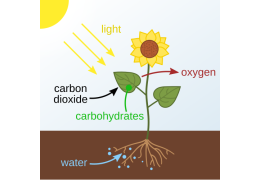
What Is Photosynthesis? And why is the most important thing on earth?
What Is Photosynthesis? And why is the most important thing on earth?
Read more

Irrigation method with lightmix (peat based substrate) + GHF Bioline (peat based substrate)
How to optimize your irrigation when using peat based substrate and organic dry amendment like our Bioline ?
Read more

What is VPD ?
VPD controls how much water the plant loses, which controls cooling, nutrient uptake, stomatal behaviour, and...
Read more
Extra mineral aerated compost tea
Extra mineral aerated compost tea (calcium and trace element)
Read more
What is a Calcium Magnesium Supplement for Plants? The Grower’s Guide
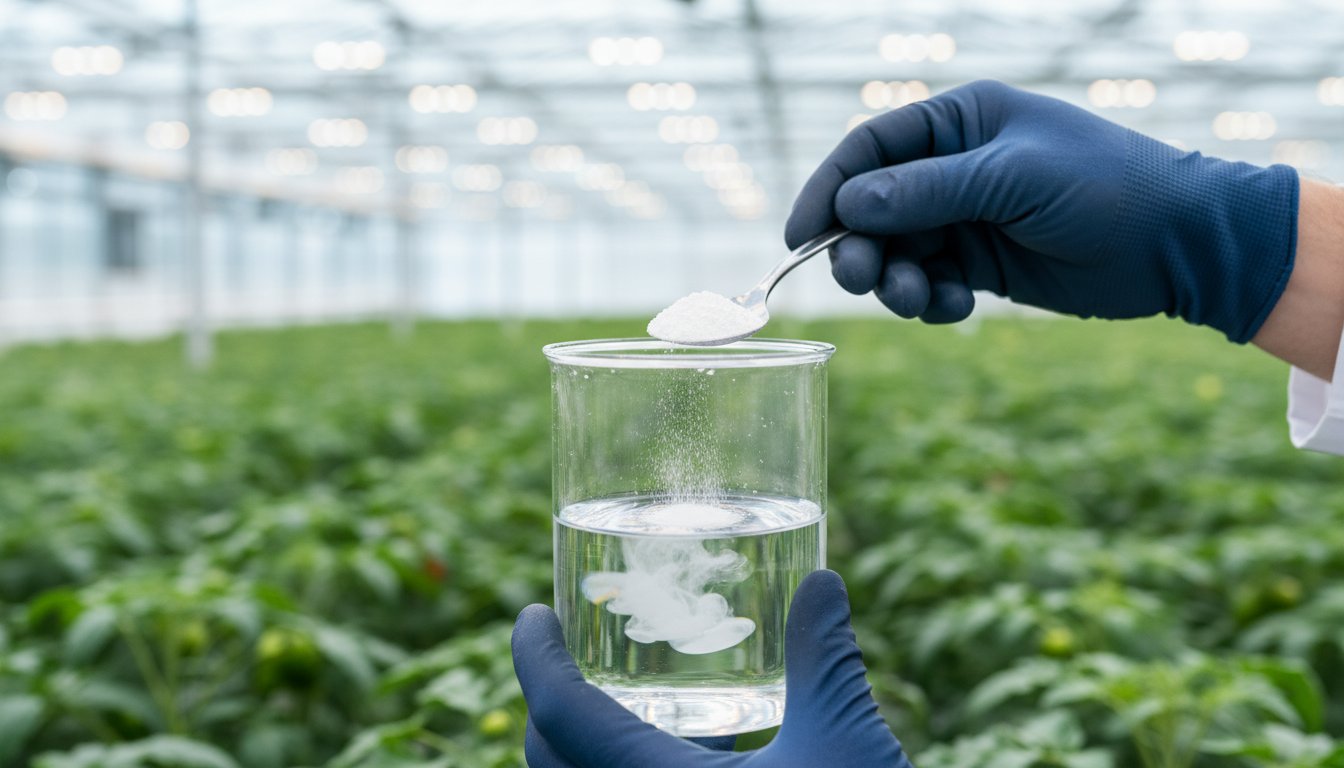
What if the yellowing between your leaf veins isn't a lack of food, but a chemical traffic jam in your root zone? You've likely seen interveinal chlorosis or brittle, stunted growth tips and felt the urge to double your base nutrients. It's a common reaction; however, horticultural studies indicate that 45% of leaf discoloration issues are actually caused by secondary nutrient imbalances rather than a lack of N-P-K. You need a clear, scientific understanding of what is a calcium magnesium supplement for plants to fix these issues at the source.
We believe that growing should be efficient and results-driven. You recognize that inconsistent water quality can compromise your plant health, yet the line between deficiency and lockout remains thin. This guide will help you master the science of secondary macronutrients to optimize bio-availability and ensure maximum yield. We'll show you how to diagnose deficiencies with surgical precision and implement a pragmatic supplementation strategy that keeps your feeding program uncomplicated and effective.
Key Takeaways
- Learn exactly what is a calcium magnesium supplement for plants and why these secondary nutrients are as vital as NPK for structural integrity.
- Identify the visual cues of deficiency and understand how environmental triggers like humidity dictate nutrient uptake.
- Discover why Reverse Osmosis (RO) water creates a mineral vacuum that requires precise re-introduction of essential elements.
- Master the science of Cation Exchange Capacity (CEC) to manage the unique nutrient demands of coco coir substrates.
- Optimize your feeding regimen with chelated powder solutions that prioritize maximum bioavailability and professional efficiency.
What is a Calcium Magnesium Supplement for Plants?
A calcium magnesium supplement is a concentrated source of secondary macronutrients designed to prevent and correct nutritional deficiencies. While growers often focus on Nitrogen, Phosphorus, and Potassium (NPK), these "secondary" elements are actually among the 17 essential plant nutrients required for a successful harvest. High-performance crops often consume these minerals at rates similar to primary macronutrients. Understanding what is a calcium magnesium supplement for plants helps you maintain the physiological balance needed for maximum yield.
These supplements also act as chemical buffers. In hydroponic systems or coco coir, CalMag stabilizes nutrient solutions and prevents rapid pH fluctuations. A stable pH between 5.8 and 6.2 ensures maximum bio-availability. You'll find these products in two main formats. Liquid versions are common, but highly soluble powder supplements offer better shelf life and lower shipping costs. Powdered formulas often reach 100% solubility within seconds, making them an efficient choice for large-scale operations.
The Biological Role of Calcium (Ca)
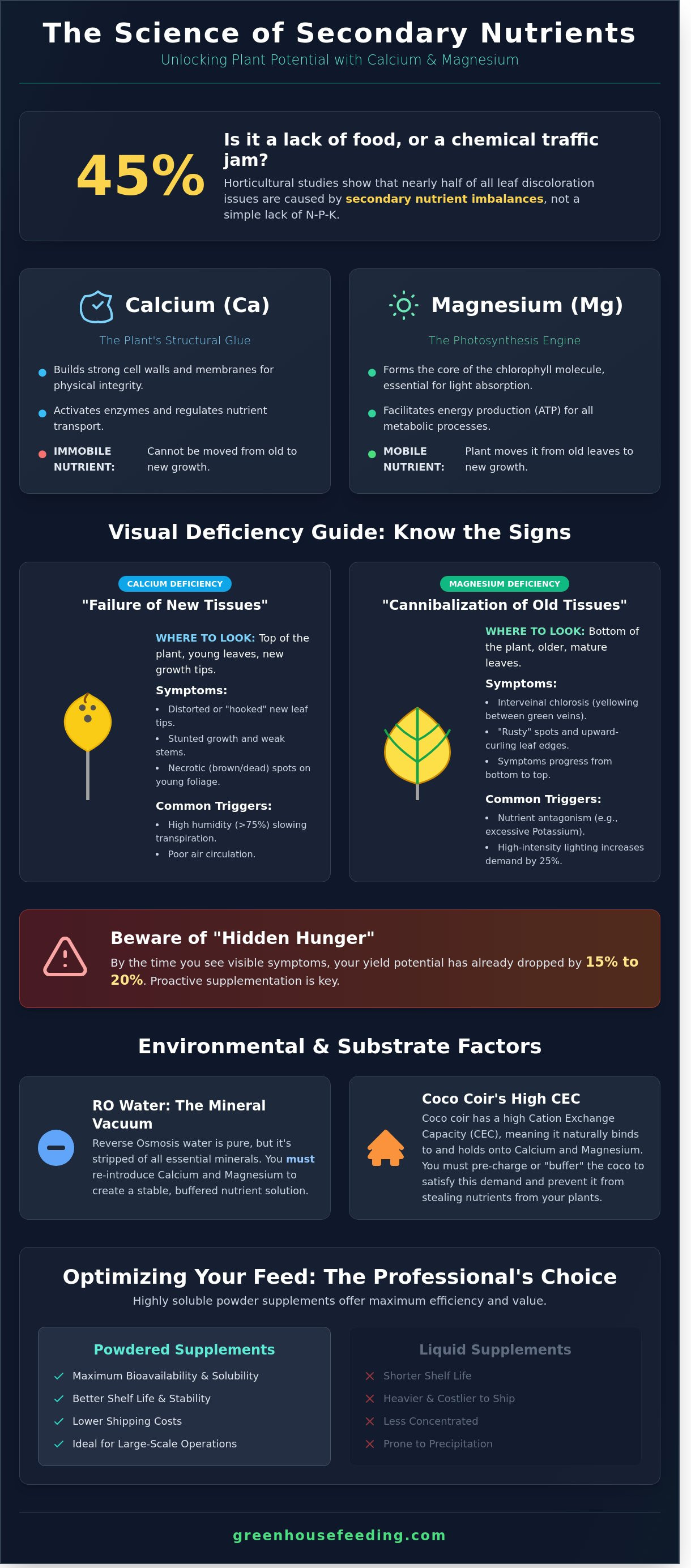
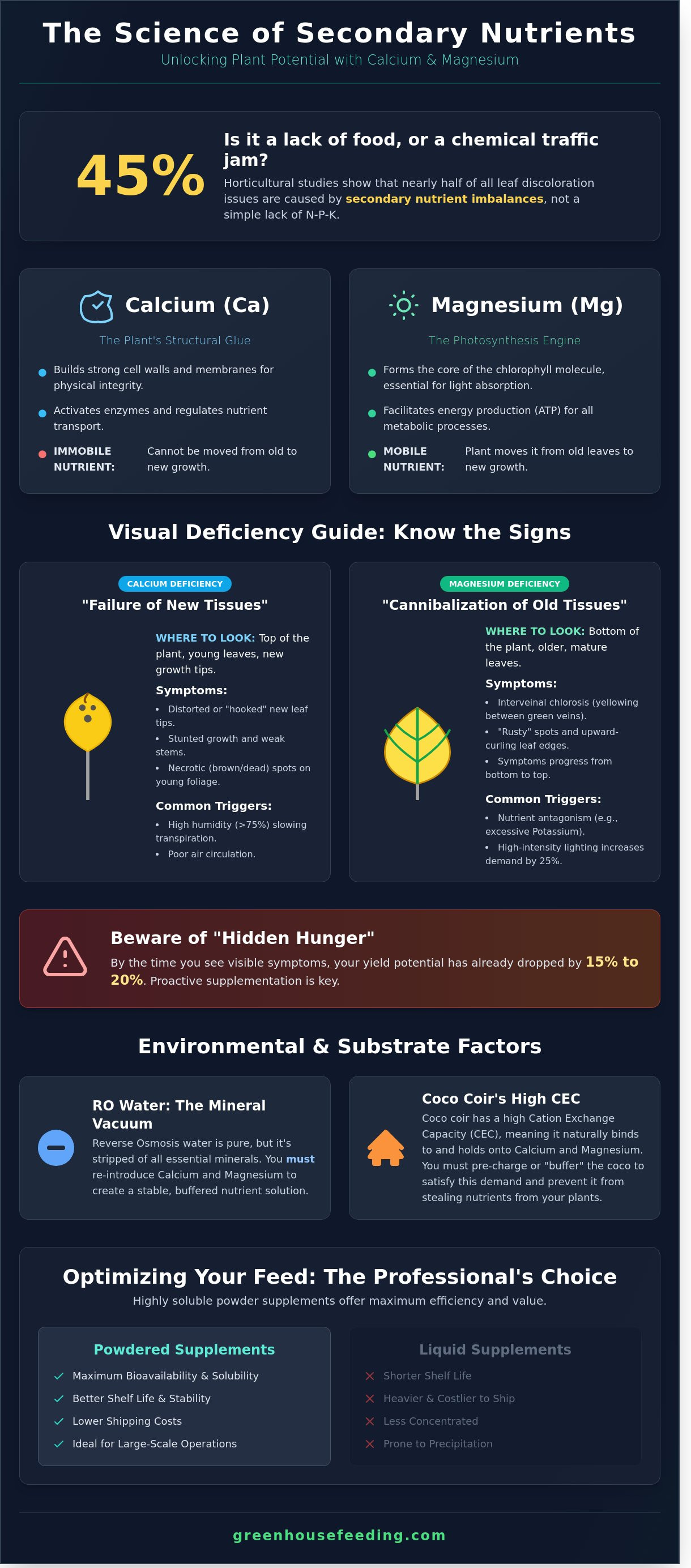
Calcium functions as the structural glue of the plant. It builds strong cell walls and membranes, ensuring the plant can support heavy fruit or flower sets. Calcium also activates specific enzymes and regulates how other nutrients move through the plant. Because Calcium is an immobile nutrient, the plant cannot relocate it from old growth to new growth. Deficiencies appear first in the youngest leaves as distorted growth or necrosis. Maintaining a constant supply is vital for cellular integrity.
The Biological Role of Magnesium (Mg)
Magnesium sits at the center of the chlorophyll molecule. Without it, photosynthesis stops. It's the engine behind energy production, facilitating the creation of ATP. Unlike Calcium, Magnesium is a mobile nutrient. When a deficiency occurs, the plant "steals" Magnesium from older, bottom leaves to support new growth. This leads to interveinal chlorosis, where the leaf veins stay green while the rest turns yellow. High-intensity lighting increases the plant's demand for Magnesium by up to 25% compared to low-light environments.
The Science of Deficiency: Identifying the Need for Supplementation
Plants often suffer in silence. By the time visual symptoms like yellowing or spotting appear, your yield potential has already dropped by 15% to 20%. This stage is known as "Hidden Hunger," where the plant lacks the resources for optimal cell division but hasn't yet reached a state of visible collapse. Understanding what is a calcium magnesium supplement for plants starts with recognizing that these minerals are not just additives; they are structural and functional necessities. Proper Calcium and Magnesium Management ensures your crop maintains its metabolic peak throughout the entire life cycle.
Spotting Calcium Deficiency
Calcium is an immobile element. The plant cannot relocate it from old leaves to support new growth. You must look at the top of the canopy for the first signs of trouble. Look for distorted, hooked leaf tips and necrotic spots on young foliage. Weak stems and stunted root systems are also common, as the plant lacks the "glue" needed for cell wall stability. Calcium deficiency is a failure of structural integrity in new tissues.
Environmental triggers often cause these issues even when Calcium is present in the soil. When humidity levels exceed 75%, transpiration slows down. Since Calcium moves through the plant via the transpiration stream, a lack of air movement effectively starves the new growth. If your grow room lacks 24-hour air circulation, you are at a higher risk for these localized deficiencies.
Spotting Magnesium Deficiency
Magnesium is mobile, meaning the plant will cannibalize its older leaves to save the new ones. Symptoms start at the bottom of the plant. You'll notice interveinal chlorosis, where the veins stay a sharp green while the surrounding tissue turns yellow. As the deficiency progresses, leaf edges may curl upward and develop a "rusty" appearance. This loss of chlorophyll can reduce a plant's photosynthetic capacity by 30% or more within a week.
Antagonism is a common cause of "fake" deficiencies. If you use a fertilizer with excessive Potassium levels, often exceeding 250 ppm in the flowering stage, the plant may struggle to absorb Magnesium. The two elements compete for the same uptake channels in the root zone. To prevent this, a clean mineral-organic feeding strategy is the most efficient way to maintain balance. Using a precise formula ensures that one nutrient doesn't lock out another.
Growers must realize what is a calcium magnesium supplement for plants in the context of high-intensity lighting. LED setups, which often lack the infrared heat of traditional lamps, can slow down mineral uptake. In these environments, targeted supplementation is the only way to ensure the plant has the 2.0% to 3.0% Calcium content in its dry matter required for maximum performance.
Water Quality and the RO Water Vacuum
Successful cultivation begins with your water source. Tap water contains varied levels of dissolved minerals, often reaching an Electrical Conductivity (EC) of 0.5 to 0.8 mS/cm. In contrast, Reverse Osmosis (RO) systems remove 99% of these impurities, resulting in a baseline EC of 0.0. While RO water provides total control, it creates a mineral vacuum. You must understand what is a calcium magnesium supplement for plants to effectively rebuild this base. Without immediate re-introduction, pure RO water aggressively seeks to balance itself, often pulling minerals directly from the plant tissue or substrate.
Managing the relationship between water hardness (dH) and nutrient uptake is a requirement for professional results. When you start with a "blank slate" like RO or distilled water, the lack of mineral density makes the solution unstable. Adding a CalMag supplement to your reservoir brings the water to a standard starting point, usually an EC of 0.4 mS/cm, before you introduce your primary flowering or growth nutrients. This creates a predictable environment for the plant's root system.
The Problem with Soft Water
Soft water lacks the carbonates needed to stabilize pH levels. When you use water with an EC below 0.2, the pH fluctuates rapidly. This instability leads to nutrient lockout and erratic growth patterns. A professional CalMag supplement functions as a critical pH buffer. It provides the mineral density required to keep your feeding solution stable. Skipping this step in a low-EC environment risks "stripping" the plant of its internal reserves. This process leads to rapid chlorosis and weakened cell walls within 48 hours of application.
Measuring Your Starting Point
Precision feeding requires data. Use a calibrated EC meter to test your source water before adding any nutrients. If your tap water tests above 0.7 EC, it likely contains excessive calcium carbonate. This high concentration causes nutrient lockout by blocking the uptake of potassium or phosphorus. Understanding what is a calcium magnesium supplement for plants allows you to decide if your water needs filtration or supplementation. For growers with soft water, the goal is to raise the starting EC to 0.4 mS/cm. Always check your local water report to identify seasonal shifts in mineral concentrations that might affect your feeding schedule.
- RO Water: 0.0 EC - Requires full supplementation.
- Soft Water: 0.1 - 0.3 EC - Requires partial supplementation to reach 0.4 EC.
- Hard Water: 0.7+ EC - May require RO filtration to prevent lockout.
Substrate Specifics: Coco Coir and Cation Exchange
Substrate choice defines your mineral management strategy. Coco coir is fundamentally different from soil because of its unique chemical makeup. It requires a specialized approach to avoid nutrient lockout. Understanding what is a calcium magnesium supplement for plants begins with the science of the growing medium.
The Coco Coir Trap
Coco coir is the most demanding substrate on the market for Calcium and Magnesium. Its Cation Exchange Capacity (CEC) is naturally saturated with sodium and potassium ions. When you apply a nutrient solution, the coco fibers release sodium to grab the Calcium. Coco coir naturally attracts Calcium ions, often at the expense of the plant's root zone. This chemical exchange makes the Calcium unavailable to the roots until the substrate is fully buffered.
Consistent application in inert media is a necessity, not an option. You must pre-charge or "buffer" unbuffered coco with a concentrated solution before planting. Professional growers typically aim for a pre-charge of 150 to 300 ppm of Calcium to ensure the medium is saturated. Without this step, the substrate will continue to "steal" minerals from your plants throughout the vegetative stage. This results in stunted growth and interveinal chlorosis within the first 14 days of the cycle.
Soil and Organic Considerations
Soil acts as a natural buffer but it's not a permanent mineral reservoir. During high-demand flowering stages, specifically weeks 4 through 7, the plant's metabolic rate often exceeds the soil's natural release of minerals. Acidic conditions further complicate this. If your soil pH drops below 6.2, Calcium availability decreases by nearly 30 percent.
- Mineral vs. Organic: Dolomite lime is a common organic amendment, but it's slow-acting. Mineral supplements provide immediate bio-availability for correcting acute deficiencies.
- pH Management: Keep soil pH between 6.2 and 6.7 to ensure optimal cation uptake.
- Salt Prevention: Excessive mineral use in potting mixes can lead to a 20 percent increase in salt accumulation. Always monitor runoff EC to prevent root toxicity.
Transitioning from soil to hydroponics requires a shift in how you view what is a calcium magnesium supplement for plants. In hydro systems, you're the sole provider of nutrition. Every milligram must be accounted for in the reservoir to maintain stability. Precision is the key to maximum yield.
Learn how to optimize your medium with Green House Feeding additives.
Optimizing Your Feed: The Green House Powder Feeding Calcium Solution
Green House Feeding operates on a single principle: Keep it Simple. While many liquid additives on the market consist of 90% water, our Powder Feeding Calcium is a concentrated, professional grade mineral-organic solution. This product provides a definitive answer to the question: what is a calcium magnesium supplement for plants? It's the essential structural foundation that prevents deficiencies before they start, ensuring your crop has the cellular strength to support heavy yields.
The Powder Advantage
Powdered nutrients offer 100% stability. They don't settle, ferment, or degrade during long-term storage like liquid alternatives. Our formulation is engineered for high solubility. It dissolves instantly in water, leaving zero residue to clog 0.5mm irrigation drippers or hydroponic filters. By choosing powder, you're paying for pure nutrition rather than the weight of water. This efficiency reduces shipping costs and storage requirements by approximately 75% compared to traditional liquid jugs. We utilize chelated micro-elements to ensure maximum bioavailability. This chemical bond protects the nutrients from reacting with other minerals, keeping them available for root uptake even if your pH fluctuates slightly between 5.5 and 6.5.
Implementation Strategy
Integrating Calcium into your schedule is straightforward. It complements our specialized lines, including Grow, Hybrids, and Short Flowering. Follow these steps for an optimal reservoir mix:
- Initial Dose: If using Reverse Osmosis (RO) or soft water, add 0.5g to 1.0g of Calcium per liter of water before adding other nutrients.
- Mixing: Stir thoroughly for 60 seconds until the powder is completely dissolved.
- Base Nutrients: Add your primary Feeding line (e.g., Short Flowering) to reach your target EC.
- Monitoring: Watch for dark green foliage and sturdy stems. If growth rates increase by 10% or more, maintain the dosage. If you notice tip burn, reduce the concentration by 0.2g per liter.
Start your application at the beginning of the vegetative stage. Continue through the flowering cycle to maintain cell wall integrity. Stop all additives 10 days before harvest to begin the final flush with pure water. You can find everything you need to begin in the Green House Feeding Starter Kit. This kit streamlines your process, allowing you to focus on the science of growth rather than the complexity of the bottle.
Elevate Your Cultivation with Precision Nutrition
Understanding what is a calcium magnesium supplement for plants is the foundation of a high-performance garden. Calcium builds the physical structure required for 100% of your plant's cell wall integrity, while magnesium drives the photosynthesis that fuels every stage of development. If you're using RO water or coco coir, these minerals are essential to balance cation exchange and prevent nutrient lockout. Green House Feeding offers award-winning formulas used by professionals in over 30 countries to secure these results. Our Powder Feeding Calcium utilizes chelated micro-elements for total bioavailability, ensuring your plants receive exactly what they need without waste. We follow a strict "Keep it Simple" philosophy, providing one powder that handles the entire life cycle. It's a streamlined approach that eliminates the clutter of liquid additives and focuses on proven botanical science. You've done the work to set up your grow; now give your plants the elite nutrition they deserve.
Explore our Powder Feeding Calcium for professional results
Frequently Asked Questions
Can I use too much Calcium and Magnesium supplement?
Excessive application causes nutrient lockout. Overloading the root zone with calcium blocks the uptake of potassium and iron. If your runoff EC exceeds 2.5, flush the medium immediately. Keep your ratios balanced to ensure optimal bio-availability and prevent toxic salt accumulation.
Is CalMag the same as Epsom salt?
Epsom salt isn't a complete solution. It contains 10% magnesium and 13% sulfur but lacks the calcium required for cell wall structure. Understanding what is a calcium magnesium supplement for plants means recognizing the necessity of a 3:1 calcium to magnesium ratio. Professional formulas provide this specific balance in a single, highly soluble product.
How often should I add a CalMag supplement to my plants?
Apply the supplement during every feeding if you're using reverse osmosis water or inert media like rockwool. Standard professional protocols suggest a dosage of 1.0ml per liter. This ensures a baseline EC of 0.4, which is the target for 95% of high-performance cultivars during the vegetative stage.
Does every plant need a Calcium Magnesium supplement?
Not every plant needs extra minerals. If your tap water tests above 70ppm of calcium, additional supplementation is unnecessary. Test your water source with a calibrated EC meter before adding products. Excessive minerals lead to salt buildup in 85% of soil-based growing systems.
Can I use CalMag as a foliar spray?
Foliar spraying is an effective way to correct acute deficiencies quickly. Mix the solution at a reduced concentration of 0.5ml per liter. Apply it when lights are off to prevent 100% of potential leaf scorch. This method delivers chelated micro-elements directly to the stomata for immediate absorption.
What happens if I don't use CalMag in coco coir?
Failure to use these minerals in coco coir results in immediate nutrient sequestration. Coco fibers have a high cation exchange capacity that naturally attracts calcium ions. If you don't add 1.5ml per liter, the medium steals the nutrients from the plant. This often leads to a 40% reduction in final harvest weight.
Does CalMag affect the pH of my nutrient solution?
These supplements will change your pH levels. Most mineral-based additives are alkaline and will raise the pH by 0.3 points on average. Always measure your solution after adding the supplement. Proper pH management ensures 100% solubility of your feeding program.
Is there an organic version of a Calcium Magnesium supplement?
Organic versions exist but they function differently. These products often utilize limestone or dolomite, which have 50% lower solubility than mineral salts. Professional growers prefer chelated mineral-organic hybrids for faster response times. This approach keeps the feeding process uncomplicated and efficient for the user.
FAQ
The Biological Role of Calcium (Ca)
Calcium functions as the structural glue of the plant. It builds strong cell walls and membranes, ensuring the plant can support heavy fruit or flower sets. Calcium also activates specific enzymes and regulates how other nutrients move through the plant. Because Calcium is an immobile nutrient, the plant cannot relocate it from old growth to new growth. Deficiencies appear first in the youngest leaves as distorted growth or necrosis. Maintaining a constant supply is vital for cellular integrity.
The Biological Role of Magnesium (Mg)
Magnesium sits at the center of the chlorophyll molecule. Without it, photosynthesis stops. It's the engine behind energy production, facilitating the creation of ATP. Unlike Calcium, Magnesium is a mobile nutrient. When a deficiency occurs, the plant "steals" Magnesium from older, bottom leaves to support new growth. This leads to interveinal chlorosis, where the leaf veins stay green while the rest turns yellow. High-intensity lighting increases the plant's demand for Magnesium by up to 25% compared to low-light environments. Plants often suffer in silence. By the time visual symptoms like yellowing or spotting appear, your yield potential has already dropped by 15% to 20%. This stage is known as "Hidden Hunger," where the plant lacks the resources for optimal cell division but hasn't yet reached a state of visible collapse. Understanding what is a calcium magnesium supplement for plants starts with recognizing that these minerals are not just additives; they are structural and functional necessities. Proper Calcium and Magnesium Management ensures your crop maintains its metabolic peak throughout the entire life cycle.
Spotting Calcium Deficiency
Calcium is an immobile element. The plant cannot relocate it from old leaves to support new growth. You must look at the top of the canopy for the first signs of trouble. Look for distorted, hooked leaf tips and necrotic spots on young foliage. Weak stems and stunted root systems are also common, as the plant lacks the "glue" needed for cell wall stability. Calcium deficiency is a failure of structural integrity in new tissues. Environmental triggers often cause these issues even when Calcium is present in the soil. When humidity levels exceed 75%, transpiration slows down. Since Calcium moves through the plant via the transpiration stream, a lack of air movement effectively starves the new growth. If your grow room lacks 24-hour air circulation, you are at a higher risk for these localized deficiencies.
Spotting Magnesium Deficiency
Magnesium is mobile, meaning the plant will cannibalize its older leaves to save the new ones. Symptoms start at the bottom of the plant. You'll notice interveinal chlorosis, where the veins stay a sharp green while the surrounding tissue turns yellow. As the deficiency progresses, leaf edges may curl upward and develop a "rusty" appearance. This loss of chlorophyll can reduce a plant's photosynthetic capacity by 30% or more within a week. Antagonism is a common cause of "fake" deficiencies. If you use a fertilizer with excessive Potassium levels, often exceeding 250 ppm in the flowering stage, the plant may struggle to absorb Magnesium. The two elements compete for the same uptake channels in the root zone. To prevent this, a clean mineral-organic feeding strategy is the most efficient way to maintain balance. Using a precise formula ensures that one nutrient doesn't lock out another. Growers must realize what is a calcium magnesium supplement for plants in the context of high-intensity lighting. LED setups, which often lack the infrared heat of traditional lamps, can slow down mineral uptake. In these environments, targeted supplementation is the only way to ensure the plant has the 2.0% to 3.0% Calcium content in its dry matter required for maximum performance. Successful cultivation begins with your water source. Tap water contains varied levels of dissolved minerals, often reaching an Electrical Conductivity (EC) of 0.5 to 0.8 mS/cm. In contrast, Reverse Osmosis (RO) systems remove 99% of these impurities, resulting in a baseline EC of 0.0. While RO water provides total control, it creates a mineral vacuum. You must understand what is a calcium magnesium supplement for plants to effectively rebuild this base. Without immediate re-introduction, pure RO water aggressively seeks to balance itself, often pulling minerals directly from the plant tissue or substrate. Managing the relationship between water hardness (dH) and nutrient uptake is a requirement for professional results. When you start with a "blank slate" like RO or distilled water, the lack of mineral density makes the solution unstable. Adding a CalMag supplement to your reservoir brings the water to a standard starting point, usually an EC of 0.4 mS/cm, before you introduce your primary flowering or growth nutrients. This creates a predictable environment for the plant's root system.
The Problem with Soft Water
Soft water lacks the carbonates needed to stabilize pH levels. When you use water with an EC below 0.2, the pH fluctuates rapidly. This instability leads to nutrient lockout and erratic growth patterns. A professional CalMag supplement functions as a critical pH buffer. It provides the mineral density required to keep your feeding solution stable. Skipping this step in a low-EC environment risks "stripping" the plant of its internal reserves. This process leads to rapid chlorosis and weakened cell walls within 48 hours of application.
Measuring Your Starting Point
Precision feeding requires data. Use a calibrated EC meter to test your source water before adding any nutrients. If your tap water tests above 0.7 EC, it likely contains excessive calcium carbonate. This high concentration causes nutrient lockout by blocking the uptake of potassium or phosphorus. Understanding what is a calcium magnesium supplement for plants allows you to decide if your water needs filtration or supplementation. For growers with soft water, the goal is to raise the starting EC to 0.4 mS/cm. Always check your local water report to identify seasonal shifts in mineral concentrations that might affect your feeding schedule. Substrate choice defines your mineral management strategy. Coco coir is fundamentally different from soil because of its unique chemical makeup. It requires a specialized approach to avoid nutrient lockout. Understanding what is a calcium magnesium supplement for plants begins with the science of the growing medium.
The Coco Coir Trap
Coco coir is the most demanding substrate on the market for Calcium and Magnesium. Its Cation Exchange Capacity (CEC) is naturally saturated with sodium and potassium ions. When you apply a nutrient solution, the coco fibers release sodium to grab the Calcium. Coco coir naturally attracts Calcium ions, often at the expense of the plant's root zone. This chemical exchange makes the Calcium unavailable to the roots until the substrate is fully buffered. Consistent application in inert media is a necessity, not an option. You must pre-charge or "buffer" unbuffered coco with a concentrated solution before planting. Professional growers typically aim for a pre-charge of 150 to 300 ppm of Calcium to ensure the medium is saturated. Without this step, the substrate will continue to "steal" minerals from your plants throughout the vegetative stage. This results in stunted growth and interveinal chlorosis within the first 14 days of the cycle.
Soil and Organic Considerations
Soil acts as a natural buffer but it's not a permanent mineral reservoir. During high-demand flowering stages, specifically weeks 4 through 7, the plant's metabolic rate often exceeds the soil's natural release of minerals. Acidic conditions further complicate this. If your soil pH drops below 6.2, Calcium availability decreases by nearly 30 percent. Transitioning from soil to hydroponics requires a shift in how you view what is a calcium magnesium supplement for plants. In hydro systems, you're the sole provider of nutrition. Every milligram must be accounted for in the reservoir to maintain stability. Precision is the key to maximum yield. Green House Feeding operates on a single principle: Keep it Simple. While many liquid additives on the market consist of 90% water, our Powder Feeding Calcium is a concentrated, professional grade mineral-organic solution. This product provides a definitive answer to the question: what is a calcium magnesium supplement for plants? It's the essential structural foundation that prevents deficiencies before they start, ensuring your crop has the cellular strength to support heavy yields.
The Powder Advantage
Powdered nutrients offer 100% stability. They don't settle, ferment, or degrade during long-term storage like liquid alternatives. Our formulation is engineered for high solubility. It dissolves instantly in water, leaving zero residue to clog 0.5mm irrigation drippers or hydroponic filters. By choosing powder, you're paying for pure nutrition rather than the weight of water. This efficiency reduces shipping costs and storage requirements by approximately 75% compared to traditional liquid jugs. We utilize chelated micro-elements to ensure maximum bioavailability. This chemical bond protects the nutrients from reacting with other minerals, keeping them available for root uptake even if your pH fluctuates slightly between 5.5 and 6.5.
Implementation Strategy
Integrating Calcium into your schedule is straightforward. It complements our specialized lines, including Grow, Hybrids, and Short Flowering. Follow these steps for an optimal reservoir mix: Start your application at the beginning of the vegetative stage. Continue through the flowering cycle to maintain cell wall integrity. Stop all additives 10 days before harvest to begin the final flush with pure water. You can find everything you need to begin in the Green House Feeding Starter Kit. This kit streamlines your process, allowing you to focus on the science of growth rather than the complexity of the bottle. Understanding what is a calcium magnesium supplement for plants is the foundation of a high-performance garden. Calcium builds the physical structure required for 100% of your plant's cell wall integrity, while magnesium drives the photosynthesis that fuels every stage of development. If you're using RO water or coco coir, these minerals are essential to balance cation exchange and prevent nutrient lockout. Green House Feeding offers award-winning formulas used by professionals in over 30 countries to secure these results. Our Powder Feeding Calcium utilizes chelated micro-elements for total bioavailability, ensuring your plants receive exactly what they need without waste. We follow a strict "Keep it Simple" philosophy, providing one powder that handles the entire life cycle. It's a streamlined approach that eliminates the clutter of liquid additives and focuses on proven botanical science. You've done the work to set up your grow; now give your plants the elite nutrition they deserve. Explore our Powder Feeding Calcium for professional results
Can I use too much Calcium and Magnesium supplement?
Excessive application causes nutrient lockout. Overloading the root zone with calcium blocks the uptake of potassium and iron. If your runoff EC exceeds 2.5, flush the medium immediately. Keep your ratios balanced to ensure optimal bio-availability and prevent toxic salt accumulation.
Is CalMag the same as Epsom salt?
Epsom salt isn't a complete solution. It contains 10% magnesium and 13% sulfur but lacks the calcium required for cell wall structure. Understanding what is a calcium magnesium supplement for plants means recognizing the necessity of a 3:1 calcium to magnesium ratio. Professional formulas provide this specific balance in a single, highly soluble product.
How often should I add a CalMag supplement to my plants?
Apply the supplement during every feeding if you're using reverse osmosis water or inert media like rockwool. Standard professional protocols suggest a dosage of 1.0ml per liter. This ensures a baseline EC of 0.4, which is the target for 95% of high-performance cultivars during the vegetative stage.
Does every plant need a Calcium Magnesium supplement?
Not every plant needs extra minerals. If your tap water tests above 70ppm of calcium, additional supplementation is unnecessary. Test your water source with a calibrated EC meter before adding products. Excessive minerals lead to salt buildup in 85% of soil-based growing systems.
Can I use CalMag as a foliar spray?
Foliar spraying is an effective way to correct acute deficiencies quickly. Mix the solution at a reduced concentration of 0.5ml per liter. Apply it when lights are off to prevent 100% of potential leaf scorch. This method delivers chelated micro-elements directly to the stomata for immediate absorption.
What happens if I don't use CalMag in coco coir?
Failure to use these minerals in coco coir results in immediate nutrient sequestration. Coco fibers have a high cation exchange capacity that naturally attracts calcium ions. If you don't add 1.5ml per liter, the medium steals the nutrients from the plant. This often leads to a 40% reduction in final harvest weight.
Does CalMag affect the pH of my nutrient solution?
These supplements will change your pH levels. Most mineral-based additives are alkaline and will raise the pH by 0.3 points on average. Always measure your solution after adding the supplement. Proper pH management ensures 100% solubility of your feeding program.
Is there an organic version of a Calcium Magnesium supplement?
Organic versions exist but they function differently. These products often utilize limestone or dolomite, which have 50% lower solubility than mineral salts. Professional growers prefer chelated mineral-organic hybrids for faster response times. This approach keeps the feeding process uncomplicated and efficient for the user.
Leave a comment
Log in to post comments